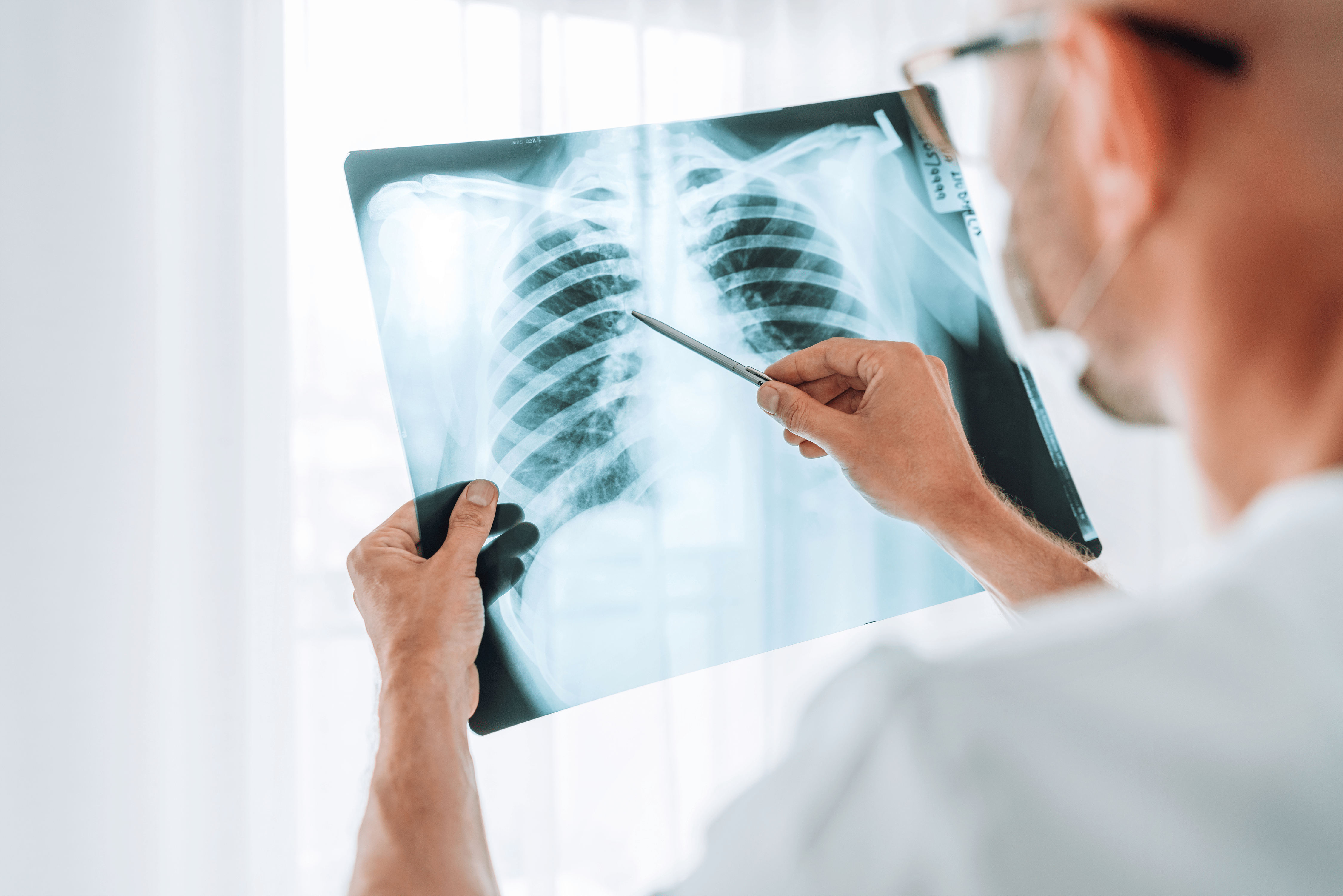
Can curative lung cancer treatment be delivered in a single visit?
Stereotactic ablative radiotherapy (SABR) is an established treatment for some patients with early-stage non-small cell lung cancer (NSCLC), delivering highly targeted radiation with the aim of curing the cancer. While SABR is usually given over several treatment sessions, research is increasingly showing that some carefully selected patients may achieve similar outcomes from a single treatment session.
This approach, known as single-fraction SABR, has the potential to make treatment more convenient by reducing hospital visits while maintaining effectiveness. Advances in imaging, treatment planning and radiotherapy delivery are helping to make this option a reality for more patients.
Historically, around 20% of people with non-small cell lung cancer (NSCLC) have been diagnosed at an early stage. Lung cancer screening is changing this. Of the lung cancers found through the NHS England screening programme up to March 2025, 63% were diagnosed at stage I, when treatment is more likely to be given with the aim of curing the cancer.1
Surgery remains the standard treatment for many people with early-stage lung cancer. However, stereotactic ablative radiotherapy (SABR) is an established curative option for people who are not well enough to have surgery or who choose a non-surgical approach. It precisely delivers a high dose of radiation to the tumour while limiting exposure to healthy tissue.
In the UK, SABR is commonly delivered over three, five or eight treatment sessions (also referred to as ‘fractions’), depending on the tumour and the patient’s needs. Growing evidence suggests that some carefully selected patients can instead receive SABR in a single fraction, with similar outcomes for tumour control, survival and side effects. This targeted approach helps maximise treatment effectiveness while reducing the risk of side effects.
Advances in imaging, planning and delivery have made this approach increasingly precise. Yet, despite supportive evidence and the benefit of fewer hospital visits, it is not widely used in routine practice. Recent research has therefore examined both its longer-term outcomes and whether the planning scan, preparation and treatment could all be completed in one day.
Single-fraction SABR: what does the evidence show?
Single-fraction SABR is not a new approach. Research has shown that, for carefully selected patients, receiving SABR in a single session can be just as effective as having treatment delivered over several sessions.
A large clinical study involving patients with early-stage non-small cell lung cancer (NSCLC) who were not suitable for surgery found that cancer control and survival outcomes were similar whether SABR was given in one session or multiple sessions. The study also found that patients who received a single treatment session experienced fewer serious side effects.2
These findings suggest that single-fraction SABR may offer a more convenient treatment option for some patients, without compromising effectiveness.
Reviews of several studies and international clinical guidance have continued to support this approach for suitable tumours away from the centre of the chest.3,4 However, uptake still varies between treatment centres.
Recently presented at the European Society for Radiotherapy and Oncology (ESTRO) 2026 Congress, a Portuguese Oncology Institute of Porto study reported results from one of the largest European cohorts treated with single-fraction SABR in routine practice.5
The study reviewed the outcomes of 247 patients with 264 localised lung tumours who were treated with a single dose of radiation between 2018 and 2022. Seventy-five per cent of patients were fully active or had only some limitations with strenuous activity.
The results were encouraging. At three years, 84% had not experienced the tumour returning in the treated area, while 78% had not experienced recurrence in the treated area or nearby region. Furthermore, treatment was also generally well tolerated for the patients, with relatively few significant side effects reported.
These findings suggest the positive outcomes previously reported in clinical trials can also be achieved in everyday practice.
From scan to treatment in one day?
While single-fraction SABR reduces treatment to one appointment, the standard pathway still involves two hospital visits. Patients first attend for a planning computed tomography (CT), or magnetic resonance imaging (MRI), scan and return one or two weeks later for treatment. During this interval, the team creates the treatment plan and completes safety checks in order to ensure the minimum radiation dose to healthy tissue.
Also presented at the ESTRO 2026 Congress, the prospective One-Stop SABR study was carried out at the Peter MacCallum Cancer Centre in Australia. It included ten people with early-stage lung cancer; nine were not well enough for surgery. Their median age was 76.5 years, and the median driving time to the treatment centre was three hours.6
Using careful planning, advanced technology and close collaboration between the healthcare team, patients were able to have their treatment planned and delivered on the same day, reducing the need for multiple hospital visits.
Nine of the ten patients completed the pathway within eight hours. The average time from the planning scan to the end of treatment was just under seven hours. All ten patients found the one-day pathway than the usual treatment approach. All patients were satisfied with their experience, and many also reported reduced personal costs by from avoiding additional journeys to hospital.
Healthcare professionals involved in the study felt the t treatment quality was at least as good as with the standard process, with 95% considering it a beneficial alternative for suitable patients. While these findings are encouraging, the study involved a small number of patients and conducted in Australia where healthcare pathways may differ from those in the UK. Nevertheless, the study shows that same-day planning and treatment is technically possible for suitable patients.
Why fewer hospital visits matter
Many people referred for SABR are older adults who may also be managing other health conditions. Some travel long distances to reach a specialist centre. Appointments can therefore involve physical effort, travel costs, time away from home and support from family or carers.
A shorter pathway can help reduce these demands. For some patients, fewer journeys and less disruption may also make specialist treatment easier to access. Reducing the number of visits needed for treatment could help make the treatment experience easier and more convenient for some patients.
How this approach is being used in practice
Through our network of 14 specialist cancer centres across the UK, patients have access to SABR delivered by our experienced multidisciplinary teams. For carefully selected patients, the clinical team will determine whether single-fraction SABR is suitable and identify the most appropriate centre and treatment platform.
The most suitable treatment schedule depends on the size and position of the tumour, as well as the patient’s overall health. Tumours close to the centre of the chest may sit near important structures such as the main airways, heart or oesophagus. In these situations, treatment may be delivered over several sessions rather than one to help protect nearby healthy tissue.
For some patients, MRI-guided adaptive radiotherapy may also be appropriate. This allows the treatment plan to be reviewed and adjusted immediately before each session to reflect the tumour’s position and any changes in the surrounding organs.
This flexible approach means treatment can be tailored to the individual, with the aim of delivering radiotherapy as safely, accurately and conveniently as possible.
Looking ahead
For certain people with early-stage lung cancer, treatment that once required several hospital visits over a number of weeks can now, be delivered in a single treatment session.
As lung cancer screening identifies more people with early-stage disease, the number who may be eligible for curative treatment is likely to increase. This is a welcome development, but it will also create greater demand for cancer services.
Approaches that maintain excellent outcomes while reducing the burden on patients and making more efficient use of clinical resources will therefore become increasingly important. Single-session SABR could reduce travel, treatment time and disruption to daily life, while also helping specialist services manage growing demand.
Its wider adoption will continue to depend on careful patient selection, accurate treatment planning and confidence in the growing evidence base. For suitable patients, however, curative lung cancer treatment delivered within a single session is becoming an increasingly realistic possibility.
Alongside maintaining excellent outcomes, we are also looking at ways to make treatment easier and more convenient for patients. Reducing the number of hospital visits, while continuing to deliver effective treatment has the potential to improve the experience for carefully selected patients. As research continues to evolve, shorter radiotherapy treatment pathways are likely to become an increasingly important option for people with early-stage lung cancer.
- Dr Crispin Hiley, Clinical Director of Lung at GenesisCare UK
References
Lee, R.W., Nair, A., Balata, H. et al. Implementation of the NHS England Lung Cancer Screening Programme over 5 years. Nat Med 32, 1817–1826 (2026). doi: 10.1038/s41591-026-04292-y
Videtic GM, Paulus R, Singh AK, et al. Long-term Follow-up on NRG Oncology RTOG 0915 (NCCTG N0927): A Randomized Phase 2 Study Comparing 2 Stereotactic Body Radiation Therapy Schedules for Medically Inoperable Patients With Stage I Peripheral Non-Small Cell Lung Cancer. Int J Radiat Oncol Biol Phys. 2019;103(5):1077-1084. doi:10.1016/j.ijrobp.2018.11.051
Guckenberger M, Belka C, Bezjak A, et al. Practice recommendations for lung cancer radiotherapy during the COVID-19 pandemic: An ESTRO-ASTRO consensus statement. Radiother Oncol. 2020;146:223-229. doi:10.1016/j.radonc.2020.04.001
Kang TM, Hardcastle N, Singh AK, et al. Practical considerations of single-fraction stereotactic ablative radiotherapy to the lung. Lung Cancer. 2022;170:185-193. doi:10.1016/j.lungcan.2022.06.014
Basílio J, Figueiredo T, Rodrigues I, et al. Single-fraction stereotactic body radiotherapy for localized non-small cell lung cancer: real-world clinical outcomes. Radiother Oncol. 2026;218(suppl 1):abstract 2516
Wallace ND, Devereux T, Moran B, et al. A prospective trial of same-day sim-plan-and-treat single-fraction SABR for early lung cancer (One Stop SABR; ACTRN12624001431516). Radiother Oncol. 2026;218(suppl 1):abstract 3883