








An overview of billing for radiation therapy
- Radiation treatment is typically an out of hospital (‘outpatient’) service, with a cost involved for your care
- Private health funds do not cover outpatient services
- Medicare typically covers approximately 80-90% of treatment costs for eligible patients (depending on your position within your Medicare Safety Nets)
- Following your initial doctor consult, you will have a dedicated fee conversation with a team member who will be able to provide you with an estimate for the cost of your care and will go through billing, invoicing and Medicare rebates in detail
- Your exact out-of-pocket costs depend on a number of factors including your personal treatment plan, complexity and your position within your Medicare Safety Nets
- We welcome non-Medicare-eligible patients. Full payment is required prior to commencing treatment.

Following your fee conversation, you will be provided with an estimate for your total cost of care. Payment will be divided into a number of separate invoices throughout the course of your treatment.
Medicare rebates are usually paid within 48 hours* of a claim being submitted to Medicare.
*Exceptions apply. In some instances, such as when the invoice for the claim exceeds $10,000, Medicare rebates may take longer to be paid.
To help alleviate some of the pressure that comes with the up-front costs associated with radiation therapy, GenesisCare has introduced a payment plan which helps make treatment costs more manageable. The aim of the GenesisCare (GC) payment plan is to make things simpler for you financially, so that you can focus on your health.
- It is an interest-free way of paying for your treatment with no fees
- No proof of income and no credit checks required
- You can manage your repayments in a more predictable way during your treatment course with direct debits generally occurring every Friday as set out in your GC payment plan schedule
- Your repayment schedule has generally been designed to align to dates when you are likely to have received your Medicare rebates. We hope that this feature helps to reduce any stress
For patients receiving outpatient radiation therapy at GenesisCare. To be eligible you must:
- be enrolled with Medicare so as to be eligible to receive Medicare rebates in respect of your treatment;
- hold an Australian bank account that can be direct debited; and
- be registered for the Medicare Safety Net.
- We pay the full price of your treatment invoices up front on your behalf using the loan facility established by the GC payment plan. This will allow you some extra time to get your finances in order prior to making any repayments via direct debit
- A separate finance entity in the GenesisCare corporate structure pays for your treatment course invoices upfront each week after you attend an appointment
- Your repayments are made via direct debit each Friday during your treatment course
- You will be given a payment plan schedule that is bespoke to your treatment, it will set out the timing for your treatment invoices and your repayments
- To pay by GC payment plan, you will be asked to sign a GC payment plan agreement and a direct debit form
- You won’t pay anything until your treatment commences, and you will only pay for the treatment that you have received
If your treatment course changes, or is deferred, a team member will be able to assist you with a revised payment plan schedule.
If you do not complete your treatment course or your GC payment plan agreement is otherwise terminated early, you will not be responsible for repaying treatment invoices in that treatment course that were not received.
Download the terms and conditions of the GenesisCare Payment Plan.
Want to know more?
Contact our friendly team to find out more.
What is the Extended Medicare Safety Net?
The Extended Medicare Safety Net (EMSN) is an Australian Government initiative designed to provide additional financial relief for individuals and families who have high out-of-pocket medical costs for out-of-hospital services. It reduces Out-Of-Pocket (OOP) expenses once a patient reaches a certain threshold of medical costs within a calendar year.
If you’re enrolled in Medicare you’re eligible for the EMSN. Each time you pay an out of pocket cost, it’s calculated towards the EMSN threshold.
How does this impact my OOP costs?
Once you hit the EMSN threshold you will recieve an extra rebate on the gap between the standard Medicare benefit and certain treatment costs. This will reduce your final OOP expenses.
How to find your position on the EMSN?
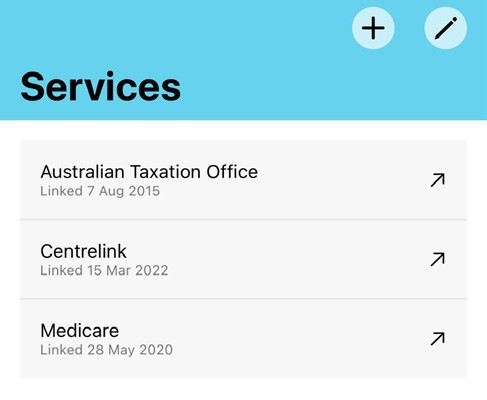
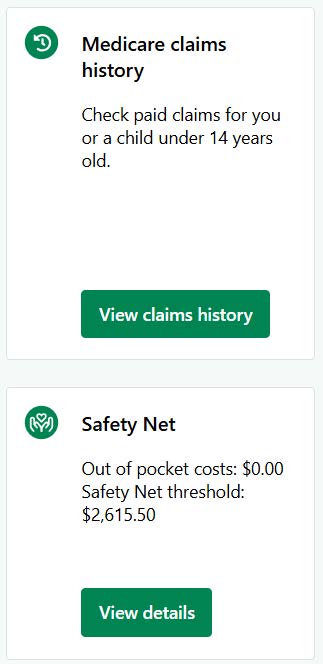
To get a more accurate estimate of your OOP costs, it’s helpful if you arrive to your fee conversation knowing your position on the EMSN. You can get this from your myGov account or by phoning Medicare directly. Unfortunately, it’s difficult for healthcare providers to get this information on behalf of patients.
Step 1: Log in to myGov to access Medicare through linked services
Step 2: Your position should be easily visible
Step 1: Dial 132 011 and follow the prompts
When does the EMSN Reset?
Medicare Safety Nets resets every calendar year, 1 January – 31 December. This means your Medicare rebate will be reduced from 1 January until you reach the Extended Medicare Safety Net threshold again.
Where can I get more information?
For more information on the EMSN visit:
- Extended Medicare Safety Net on the Services Australia website
- Medicare Safety Nets on the Department of Health and Aged Care website