
We’d have lost mum if she hadn’t had this treatment!
Elise is a 75-year-old retired BP reprographics technician from Essex who leads an active and fulfilling life. She enjoys walking, spending time with friends and keeping busy socially. As the proud mother of a daughter and two sons, and grandmother to seven grandchildren, the youngest now aged 21, family is especially important to her.
“In early 2025 I began experiencing heavy vaginal bleeding and constipation which continued for several months. I then started to get a burning sensation when passing urine. At first, I didn’t tell anyone, not even my family. I convinced myself it was probably a prolapsed womb and tried to carry on as normal”.
In May 2025, Elise's son became increasingly concerned about his mother’s health after noticing how unwell she’d become. He took her to hospital, where she was very quickly diagnosed with stage 3 cervical cancer. Within days, she was referred to Dr Gemma Eminowicz, Consultant Clinical Oncologist and Brachytherapy Lead at UCLH in London, to discuss her treatment options.
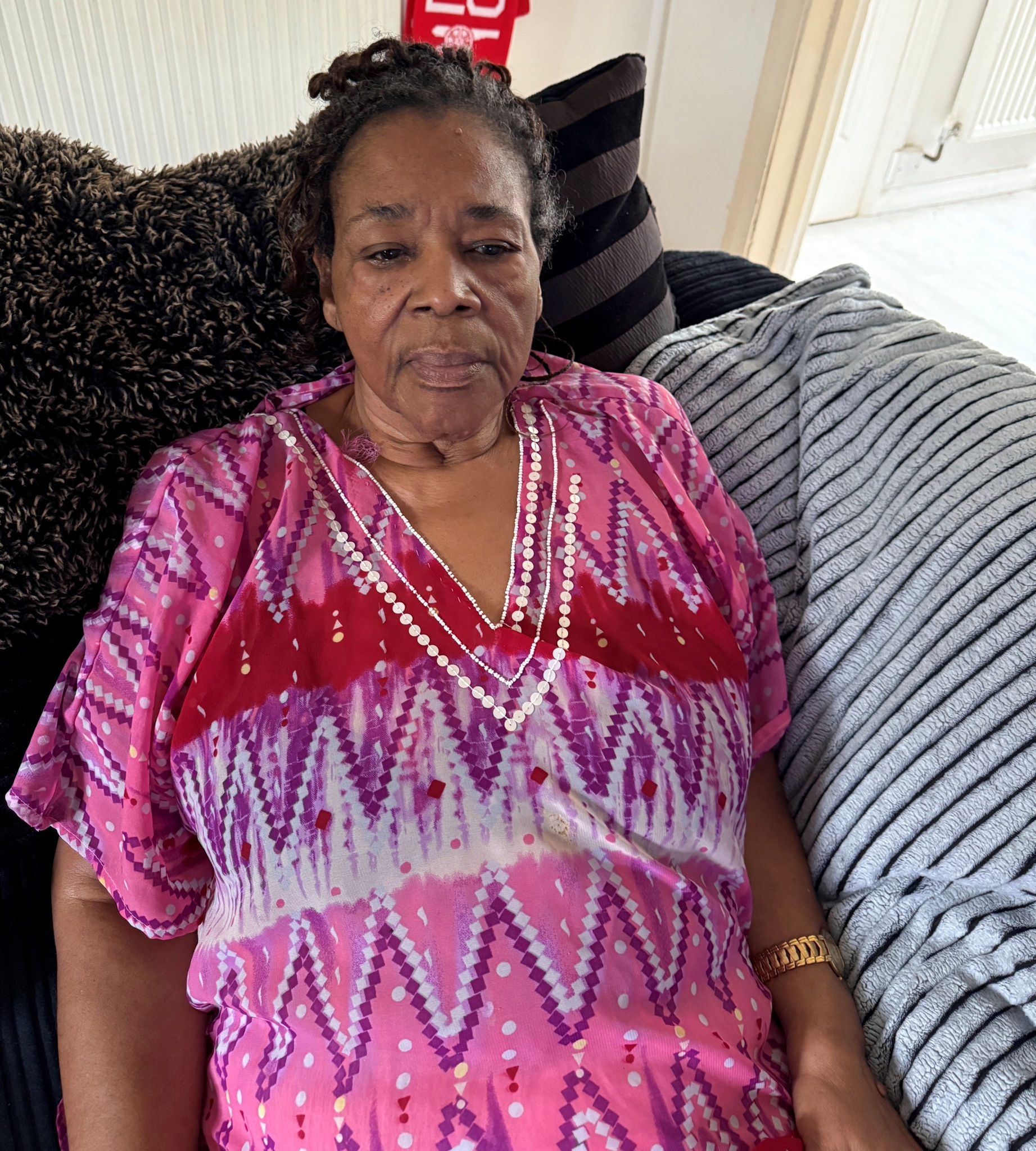
Marie, Elise’s daughter explains, “It wasn’t until Mum’s symptoms became more severe and she started to feel weak that she admitted something wasn’t right. Her bleeding was extremely heavy, and she had a strong-smelling discharge that she found distressing. Things had become so bad her quality of life was really starting to suffer.
She’d also started looking very sick. She’d lost her appetite and around 3 stone in weight. It was so frightening because we’d never seen our mum sick before”.
Elise tells us “My children were really scared about me having any treatment because I was already so weak, but I wanted to get better and at the end of the day felt I had nothing to lose at that point.”
Dr Eminowicz explains “By the time Elise’s cancer was diagnosed and she was referred to me, the tumour was quite large and blocking the normal flow of urine from her kidneys, so before we could start any treatment we needed to place a tube into the kidney to help drain urine to prevent any further complications. She then began a six-week course of chemotherapy to help shrink the tumour before continuing her treatment with a combination of radiotherapy and chemotherapy.”
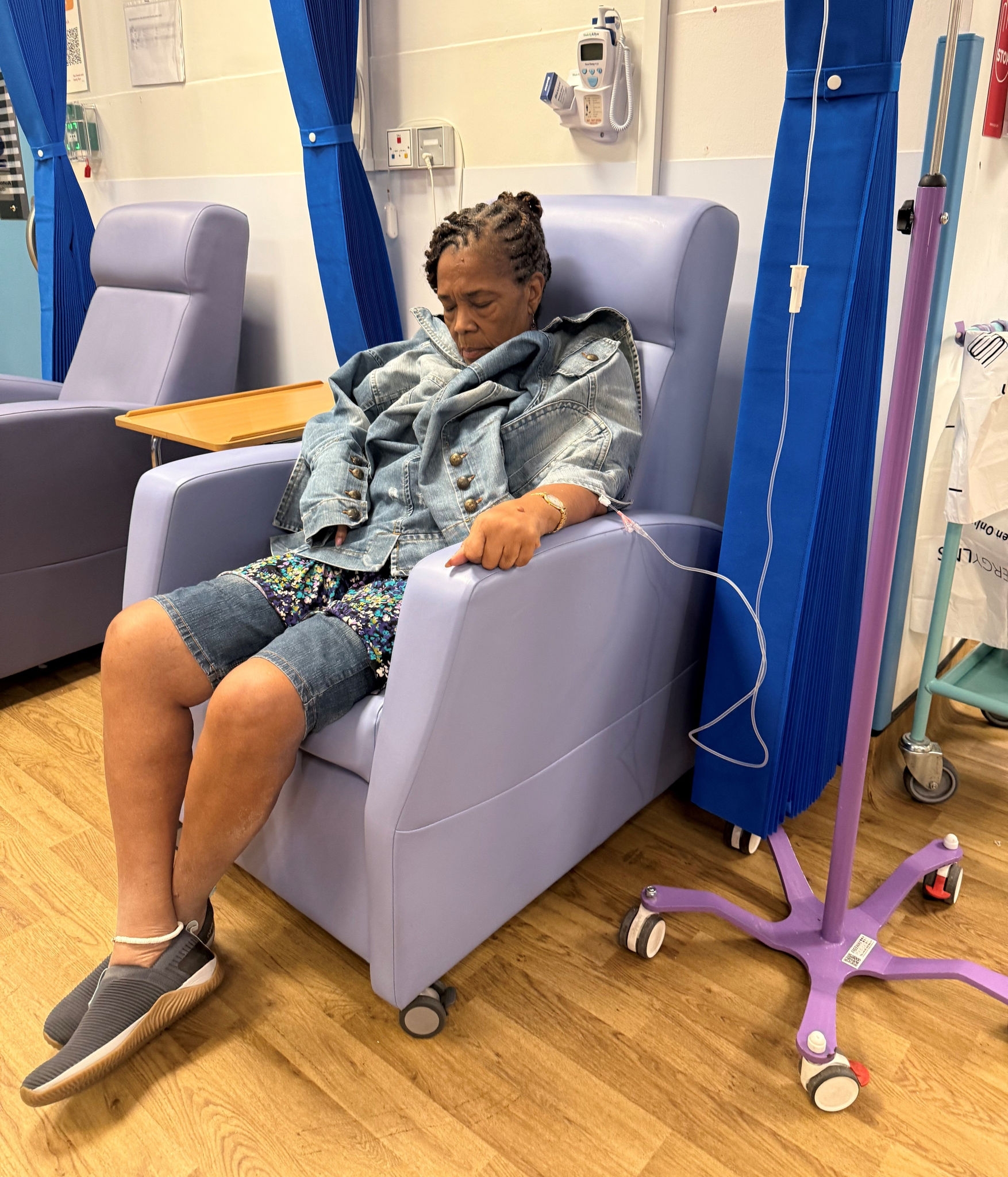
Marie goes on to say “I remember when mum was just about to start her second chemo session, Dr Eminowicz came running towards us at the hospital. We thought she had bad news, but she wanted to show us how dramatically the cancer cells had reduced after just one treatment. It was such a relief to know that even after such a short period of time this treatment was proving effective.
In September 2025, Elise was due to start the second phase of her radiotherapy treatment - a special type of internal radiotherapy called brachytherapy which is used to deliver high dose radiation directly into the centre of the cervical cancer. Unfortunately, it coincided with her catching the flu which made her cough a lot, causing an issue with the delivery of the treatment.
Dr Eminowicz explains, “Unfortunately, after two attempts we discovered it wasn’t possible to safely position the treatment equipment and needed to explore alternative treatment options for Elise.
As brachytherapy wasn’t an option, I discussed a new advanced form of radiotherapy which is currently available in the UK for locally advanced cervical cancers at GenesisCare. Unlike standard radiotherapy, MRI-guided radiotherapy is delivered using a machine called an MR Linac, which combines MRI imaging with radiotherapy. This allows us to see the tumour clearly before each treatment and adapt the plan if needed to account for normal day-to-day changes within the body..
The precision of the MR Linac meant we could deliver a higher dose of radiation directly to Elise's tumour while reducing exposure to surrounding healthy tissues. This helped maximise the chance of controlling the cancer while minimising side effects”.
My treatment on the MR Linac was a breeze. I only needed to have five, 1 hour treatment sessions.
Marie goes on to say “Dr Eminowicz was very reassuring. Mum was so weak by this point, but she explained the treatment on the MR Linac would be mum’s best bet. We’d have lost mum if she hadn’t had this treatment!”
Elise explains “My treatment on the MR Linac was a breeze. I only needed to have five, 1 hour treatment sessions which I had at the GenesisCare Centre at London Cromwell Hospital. It was very straight forward – I couldn’t feel anything, I just had to lie in the machine. I could watch a video of flowers and scenery on a screen behind me. That helped me relax and stay calm during each session.”
Dr Eminowicz explains “Elise’s tumour responded very well to treatment on the MR Linac. She experienced minimal side effects and her most recent MRI scan in January 2026 showed there were no signs of residual cancer.”
Elise continues “When I started my cancer journey, I felt claustrophobic. Not from the treatment but because of the shadow cancer cast over us as a family. I always tried to keep a positive mindset and found being outside helped so I’d try and walk as much as I could. Now I feel free and am glad I’ve got my life back and a future to look forward to.”
Elise is now back living her life to the full and recently returned from a Caribbean break with Marie, who took her to visit family and recuperate in the sunshine.
Find out more about MRI-guided radiotherapy boost for locally advanced cervical cancer here.