
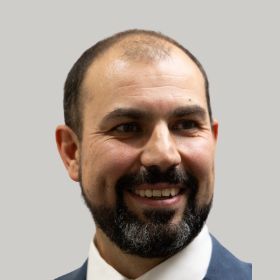
Dr Matt Simpson
FRCA, MBChB, Consultant Anaesthetist
Languages spoken
English
Expert in
Advanced Vascular Access, Major Colorectal Surgery, Obstetric Anaesthesia, Sedation
Overview
Specialises in
Dr Matt Simpson is a Consultant Anaesthetist at Leeds Teaching Hospitals NHS Trust, with specialist expertise in advanced vascular access, obstetric anaesthesia and perioperative care. Alongside his clinical practice, he has a longstanding interest in medical innovation, education and the development of services that improve patient safety, experience and outcomes.
After graduating from the University of Leeds Medical School in 2002, Dr Simpson began his medical career in general medicine and surgery before gaining further experience in Emergency Medicine, both in the UK and in Wellington, New Zealand. He subsequently undertook specialist anaesthetic training in West Yorkshire, achieving Fellowship of the Royal College of Anaesthetists (FRCA) in 2008 and completing his Certificate of Completion of Training (CCT) in 2012. He was then appointed as a Consultant Anaesthetist at Leeds Teaching Hospitals NHS Trust.
Dr Simpson has played a leading role in developing vascular access services across the Trust. In 2016, he established the Vascular Access Specialist Team, which has grown into a highly successful service now inserting more than 5,000 vascular access devices annually. As Clinical Lead for Vascular Access since 2018, he has overseen significant advances in clinical practice, training and service delivery.
One of his key innovations was the introduction of ECG-guided catheter tip location technology, enabling the majority of peripherally inserted central catheters (PICCs) to be inserted safely at the bedside rather than in a radiology department. This transformation has improved access to treatment, reduced delays and avoided the need for routine X-ray confirmation in many patients.
With personal experience of more than 4,000 central venous access device insertions, Matt has extensive expertise across the full range of vascular access devices and techniques. His work has contributed to national practice, including his involvement in the Association of Anaesthetists' national working group responsible for developing the 2025 Safe Vascular Access Guidelines. His expertise has also taken him internationally, providing specialist vascular access training to experienced clinicians in South Africa and Germany.
In addition to his vascular access work, Matt held the position of Clinical Lead for Obstetric Anaesthesia at St James's University Hospital. His wider anaesthetic practice encompasses colorectal, thoracic, obstetric and ophthalmic surgery, providing both general anaesthesia and sedation across a broad range of surgical specialties.
Education and professional development have remained central to his career. Together with two consultant colleagues, Matt co-founded the National Anaesthetic Final Examination Preparation Course, widely known as the Leeds Crammer. The course has become a well-established resource for anaesthetic trainees preparing for their final FRCA examinations, reflecting his commitment to supporting the next generation of anaesthetists.
Matt also has a strong interest in medical technology and innovation. He has collaborated with the University of Leeds School of Engineering on several healthcare projects, contributing to the development of novel medical technologies and holding multiple patents.
Since 2018, Matt has worked closely with several oncology teams across West Yorkshire, helping to develop and expand specialist vascular access services for patients undergoing cancer treatment. Working collaboratively with oncologists and specialist nursing teams, he remains committed to providing timely, high-quality access to treatment and supporting the continued development of oncology services across Yorkshire.
Throughout his career, Matt has combined clinical expertise with a practical approach to innovation, education and service improvement. His work is driven by a commitment to making healthcare safer, more efficient and more accessible for patients.
I believe that good medical care is about much more than simply performing a procedure well or administering an anaesthetic. It’s about taking the time to listen, understand each patient's individual needs and making sure they feel informed, reassured and confident in the care they receive. I recognise that undergoing surgery or having a vascular access device inserted can be daunting, particularly for patients who are already dealing with a serious illness. My approach is to make the experience as comfortable, straightforward and stress-free as possible. I’m passionate about improving the way we deliver healthcare, whether that's through introducing new techniques, developing better services or finding ways to make treatments less invasive and more accessible. Above all, I want my patients to feel that they are in experienced, capable hands, that their concerns have been heard and that I will treat them with the same care and attention I would want for my own family.
What would you say to a patient interested in being cared for by you?
I believe that understanding your concerns, answering your questions and taking the time to explain your options are just as important as the treatment itself.

Other practising or consulting locations
- Leeds Teaching Hospitals NHS Trust
- Spire Leeds Hospital
- Fortrea Clinical Trials Unit

Clinical & research interests
- Advanced vascular access for difficult vascular access patients
- Education and training in safe vascular access
- Major haemorrhage
- Fibrinogen concentrate use in major haemorrhage

Professional memberships
- Royal College of Anaesthetists (RCoA)
- National Institute of Vascular Access Skills (NIVAS)
- Vascular Access Society of Britain & Ireland (VASBI)
- Vascular Access Society (VAS)
- Association of Anaesthetists (AAGBI)

Awards received
- Clinical Excellence Award (Level 3)

Publications & affiliations
Johnston AJ, et al. Association of Anaesthetists guidelines: safe vascular access 2025 Guideline. Anaesthesia. 2025;80(11):1381–1396.
Ahmed H, et al. Training for healthcare professionals in midline intravenous catheter placement at Leeds Teaching Hospitals Trust. BJA Open. 2023; 6:100173.
Amiyangoda S, et al. Port-a-Cath Related Complications in Home Parenteral Support Patients: A Single-Centre Experience. British Association for Parenteral and Enteral Nutrition (BAPEN). 2025.
Wetherhead W, et al. Investigating equity of provision of labour epidural analgesia using the K2 Athena system. 2026. Abstract number 7147049, International Journal of Obstetric Anesthesia.
Pathak S, et al. Anaesthetic and pharmacological techniques to decrease blood loss in liver surgery: a systematic review. ANZ Journal of Surgery. 2015; 85(12):923–930.

GMC registration
GMC Registration number: 6050576