
All cancer treatments may cause side effects, and the type and severity of these can vary between individuals. Side effects will also differ depending on the treatment area and its proximity to surrounding organs and tissues.1–3
Typical side effects may include:1–3
| Symptom | Treatment site | Short-term | Long-term |
|---|---|---|---|
| Cough or shortness of breath | Lung | ✓ | |
| Fatigue (tiredness) | Most treatment areas | ✓ | |
| Joint or muscle stiffness | Around the treatment area | ✓ | |
| Low blood counts | Various areas | ✓ | |
| Risk of a second cancer (risk is small but not zero) | Any area | ✓ |
| Symptom | Treatment site | Short-term | Long-term |
|---|---|---|---|
| Headaches | Brain | ✓ | |
| Cognitive effects (memory or concentration changes) | Brain | ✓ | |
| Seizures (more likely if you’ve had them before) | Brain | ✓ | |
| Brain swelling (oedema) | Brain | ✓ | |
| Peripheral neuropathy (numbness or tingling in hands/feet) | Various areas | ✓ | ✓ |
| Ear symptoms (earache, tinnitus) | Brain, head and neck | ✓ | ✓ |
| Blurry or reduced vision | Brain, head and neck, eye | ✓ |
| Symptom | Treatment site | Short-term | Long-term |
|---|---|---|---|
| Skin changes (dry, red or itchy skin) | Around the treatment area | ✓ | |
| Hair loss or thinning (in the treatment area) | Most areas | ✓ | |
| Lymphoedema (swelling) | Most common in breast and pelvic regions | ✓ |
| Symptom | Treatment site | Short-term | Long-term |
|---|---|---|---|
| Mouth and throat changes (dry mouth, sore throat, ulcers, dental issues, jaw stiffness) | Head and neck | ✓ | |
| Difficulty swallowing (dysphagia) | Chest, throat | ✓ | |
| Loss of appetite | Brain, head and neck, throat | ✓ | |
| Loss of taste and/or smell (taste may take several months to return) | Brain, head and neck | ✓ |
| Symptom | Treatment site | Short-term | Long-term |
|---|---|---|---|
| Cough or shortness of breath | Lung | ✓ |
| Symptom | Treatment site | Short-term | Long-term |
|---|---|---|---|
| Digestive problems (e.g., diarrhoea, cramping) | Abdominal areas | ✓ | |
| Nausea (feeling sick) | Abdominal areas | ✓ |
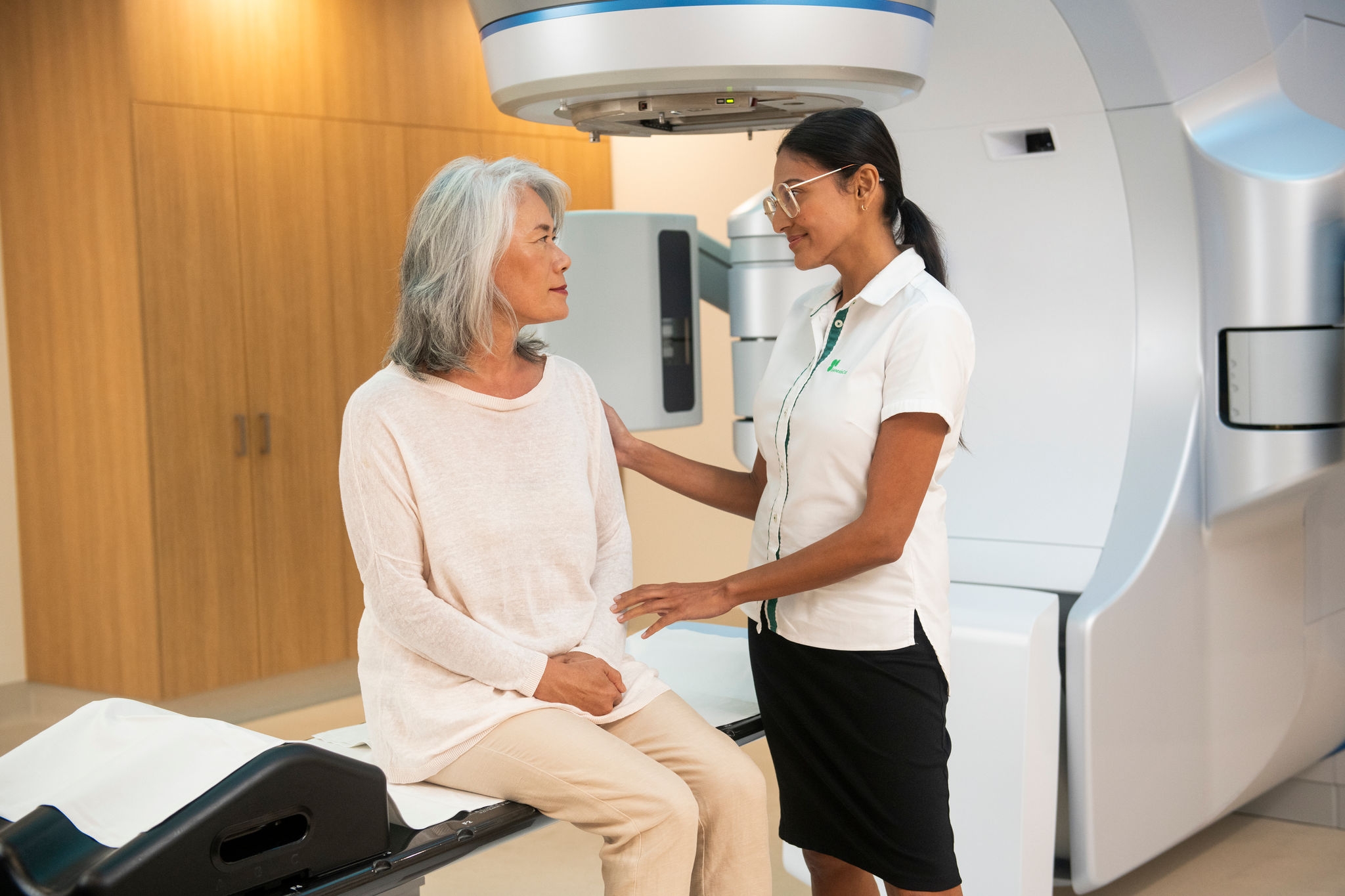
Radiation therapy is delivered in a precise and targeted way, which is designed to limit exposure to nearby healthy tissue; however, side effects can still occur.1,4
The most common side effect is fatigue—a feeling of tiredness or low energy. Fatigue may appear soon after treatment begins or develop more gradually, and its intensity can vary.1–3
More information on fatigue, including ways to manage it can be found on the National Cancer Institute website.
Other side effects depend on the part of the body being treated. Most side effects resolve after treatment finishes, though some may be longer lasting, and others may not appear until later.
If side effects become difficult to manage, your radiation oncologist may adjust your treatment or recommend a short break. Your treatment team will discuss any changes with you if needed.1–4
For a more detailed list of side effects, refer to the Cancer Council Australia or eviQ (NSW Health) websites.
Radiation therapy works by using high-energy ionising radiation to damage the DNA of cancer cells so they stop dividing and die.5-7 However, the radiation can also affect nearby healthy cells in the treatment area.5-7
When nearby healthy cells are affected by radiation, they may take time to repair, and this process can result in side effects such as fatigue, skin changes, or other reactions in the treated area.3
Most side effects from radiation therapy are temporary and gradually improve after treatment finishes as healthy cells recover. However, some side effects can be long-term or permanent, depending on factors such as the area treated, the total radiation dose, and individual response to treatment.8
In some cases, side effects may appear months or years after treatment, known as late effects.6
Side effects from radiation therapy often begin during the course of treatment, usually after the first few sessions, and may increase gradually as treatment continues. Many side effects improve within weeks to months after treatment ends as healthy cells recover, although the timing varies depending on the treatment area, dose and individual response.8
Some side effects can develop or persist months or years after treatment, known as late or long-term effects, which are less common but possible.6
Yes. While many side effects occur during treatment or shortly after it ends, some side effects can appear months or years after radiation therapy, known as late effects. These occur because radiation can cause long-term changes in healthy tissue over time, and the risk depends on the treatment area, radiation dose, and individual factors.8
Late effects are less common, but your treatment team will continue to monitor you during follow-up appointments to manage any changes if they occur.6
Side effects from radiation therapy vary because each person’s treatment plan is unique. Factors such as the area of the body being treated, the total radiation dose, how the dose is delivered, and the number of treatment sessions all influence which side effects may occur and how noticeable they are.3
People also differ in how their healthy cells respond to and recover from radiation, which can influence the type and duration of side effects experienced.3
In addition, overall health, previous treatments, and whether radiation therapy is combined with other treatments can affect side effects as well as individual factors such as age and biological differences.7 Meaning people receiving similar treatment can have different experiences.8
Fatigue is one of the most common side effects of radiation therapy. It can develop gradually during treatment and may continue for weeks or months after treatment finishes. Radiation-related fatigue is different from normal tiredness and may not improve fully with rest, as it can be caused by the body repairing healthy cells, the cancer itself, and the cumulative effects of treatment.2
The severity and duration of fatigue vary between individuals and depend on factors such as the treatment area, dose, and overall health.6
Radiation therapy may cause hair loss, but only in the area being treated. Hair loss can start during or after treatment and often begins to grow back weeks or months after treatment ends, although regrowth can vary.9,10 Hair loss may be temporary or permanent depending on the total dose used.
This type of hair loss is different from what many people experience with chemotherapy, which is the cancer treatment most often associated with hair loss all over the body. Hair loss with chemotherapy happens because the drugs act throughout the whole body and affect hair follicles wherever they are, not just in one area.11,12
Radiation therapy, particularly when the head and neck are treated, can cause changes to taste and smell because radiation may affect taste buds, salivary glands, and nearby tissues.8
These changes are most often temporary but may last beyond treatment for some people.6
Radiation therapy is generally not recommended during pregnancy because high doses of radiation can harm a developing baby, increasing the risk of miscarriage, birth defects or other effects depending on the stage of pregnancy and dose exposure.13
Because of these potential risks, doctors usually discuss the risks and benefits of delaying or modifying treatment with pregnant patients to help guide decisions, and any radiation during pregnancy is assessed carefully by a multidisciplinary team.14
For breastfeeding, radiation therapy to the breast area can reduce or eliminate milk production in the treated breast, meaning that the affected breast may not produce much milk afterwards, though the other breast may still be able to supply milk if not treated or disrupted by surgery.15
While external beam radiation itself does not make breast milk radioactive, and doesn’t inherently require stopping breastfeeding from a breast not being treated, it’s important to talk with your treatment team about your individual situation and any medications you’re receiving that could affect breastfeeding safety.16,17
Radiation therapy can affect fertility in both women and men, and these effects may be temporary or permanent depending on the treatment area and dose.8
For women, radiation therapy can affect the ovaries, reducing the number of healthy eggs available, and may also impact the uterus, cervix, vagina or vulva if these areas are within the treatment field, which can influence fertility and pregnancy outcomes.18
For men, radiation therapy can affect sperm production, including sperm count, quality and motility (how sperm move), particularly when the testes or nearby areas are exposed to radiation.19
If fertility is a concern, speak with your treatment team before starting treatment so you can discuss options that may be available.20
Cancer Council Australia. (2023). Understanding radiation therapy. Retrieved September 2025, from https://www.cancer.org.au/assets/pdf/understanding-radiation-therapy-booklet
Chaput, G., & Regnier, L. (2021). Radiotherapy: Clinical pearls for primary care. Canadian Family Physician, 67(10), 753–757. https://doi.org/10.46747/cfp.6710753
National Cancer Institute. (2025, May 15). Radiation therapy side effects. Retrieved September 2025, from https://www.cancer.gov/about-cancer/treatment/types/radiation-therapy/side-effects
Symonds, P., & Walter, J. (2012). Walter and Miller’s textbook of radiotherapy: Radiation physics, therapy and oncology. Churchill Livingstone.
National Cancer Institute. (2025, May 15). Radiation therapy for cancer. Retrieved September 2025, from https://www.cancer.gov/about-cancer/treatment/types/radiation-therapy
National Cancer Institute. (2025, May 15). Radiation therapy side effects. Retrieved September 2025, from https://www.cancer.gov/about-cancer/treatment/types/radiation-therapy/side-effects
- eviQ Cancer Treatments Online. (2022, November 21). Managing the side effects of anti-cancer medicines. Retrieved September 2026, from https://www.eviq.org.au/patients-and-carers/patient-information-sheets/managing-side-effects/3088-managing-the-side-effects-of-anti-cancer-medi
National Health Service. (2023, July 27). Radiotherapy – Side effects. Retrieved September 2025, from https://www.nhs.uk/tests-and-treatments/radiotherapy/side-effects/
Cancer Council Australia. (2024). Hair loss (radiation therapy side effect). Retrieved September 2025, from https://www.cancercouncil.com.au/cancer-information/cancer-treatment/radiation-therapy/side-effects/hair-loss/
Cancer Institute NSW. (2025). Hair loss – Side effects of cancer treatment. Retrieved September 2025, from https://www.cancer.nsw.gov.au/general-cancer-information/diagnosis-and-treatment/treatment/side-effects/hair-loss
Cancer Research UK. (2023, March 2). About hair loss and thinning due to cancer treatment. Retrieved September 2025, from https://www.cancerresearchuk.org/about-cancer/coping/physically/changes-appearance/hair-loss/treatment
Mayo Clinic. (2023, November 30). Chemotherapy and hair loss: What to expect. Retrieved September 2025, from https://www.mayoclinic.org/tests-procedures/chemotherapy/in-depth/hair-loss/art-20046920
American Cancer Society. (2024, March 4). Treating breast cancer during pregnancy. Retrieved September 2025, from https://www.cancer.org/cancer/types/breast-cancer/treatment/treating-breast-cancer-during-pregnancy.html
Gueiderikh, A. (2025). Radiotherapy and pregnancy: 2025 update. Cancer/Radiothérapie. https://doi.org/10.1016/j.canrad.2025.03.005
Leal, S. C., Stuart, S. R., & Carvalho, H. A. (2013). Breast irradiation and lactation: A review. Expert Review of Anticancer Therapy, 13(2), 159–164. https://doi.org/10.1586/era.12.178
MD Anderson Cancer Center. (2023, October 5). Can you breastfeed or chestfeed after breast cancer treatment? Retrieved September 2025, from https://www.mdanderson.org/cancerwise/can-you-breastfeed-chestfeed-after-breast-cancer-treatment.h00-159623379.html
e-lactation. (n.d.). External radiotherapy. Retrieved September 2025, from https://www.e-lactation.com/en/external-radiotherapy-pr/
Cancer Council Australia. (2024). Radiation therapy and fertility. Retrieved September 2025, from https://www.cancercouncil.com.au/cancer-information/managing-cancer-side-effects/fertility-and-cancer/treatment-side-effects-and-fertility/radiation-therapy/
National Cancer Institute. (2025, May 15). Fertility issues in men. Retrieved September 2025, from https://www.cancer.gov/about-cancer/treatment/side-effects/fertility-men
Cancer Council Australia. (2023). Fertility and cancer. Retrieved September 2025, from https://www.cancer.org.au/cancer-information/cancer-side-effects/fertility
Cancer Council Australia. (2024). Fatigue (radiation therapy side effect). Retrieved September 2025, from https://www.cancercouncil.com.au/cancer-information/cancer-treatment/radiation-therapy/side-effects/fatigue/