




Theranostics is a personalised approach to cancer treatment, integrating diagnostic and therapeutic technologies to enhance patient outcomes. It is also referred to as radiopharmaceutical therapy (RPT).
Using both diagnostic and therapeutic tools, theranostics uses targeted molecules that bind to specific receptors on cancer cells, delivering radiation directly to them. This approach can target both primary and metastatic cancer cells.
Its targeted mechanism aims to reduce exposure to healthy tissue and minimise potential side effects, making it a generally well-tolerated treatment option. It is used with the aim of slowing cancer growth and spread, relieving symptoms, and maintaining or improving quality of life.1,2
Theranostics may be suitable for some patients whose cancer has not responded to other treatments or has spread to multiple sites (metastatic disease).
A specialist physician will determine whether theranostics is appropriate for you.
Make an enquiry
Find out more about GenesisCare's Theranostics treatment options.
Phase 1: Theranostics Diagnosis
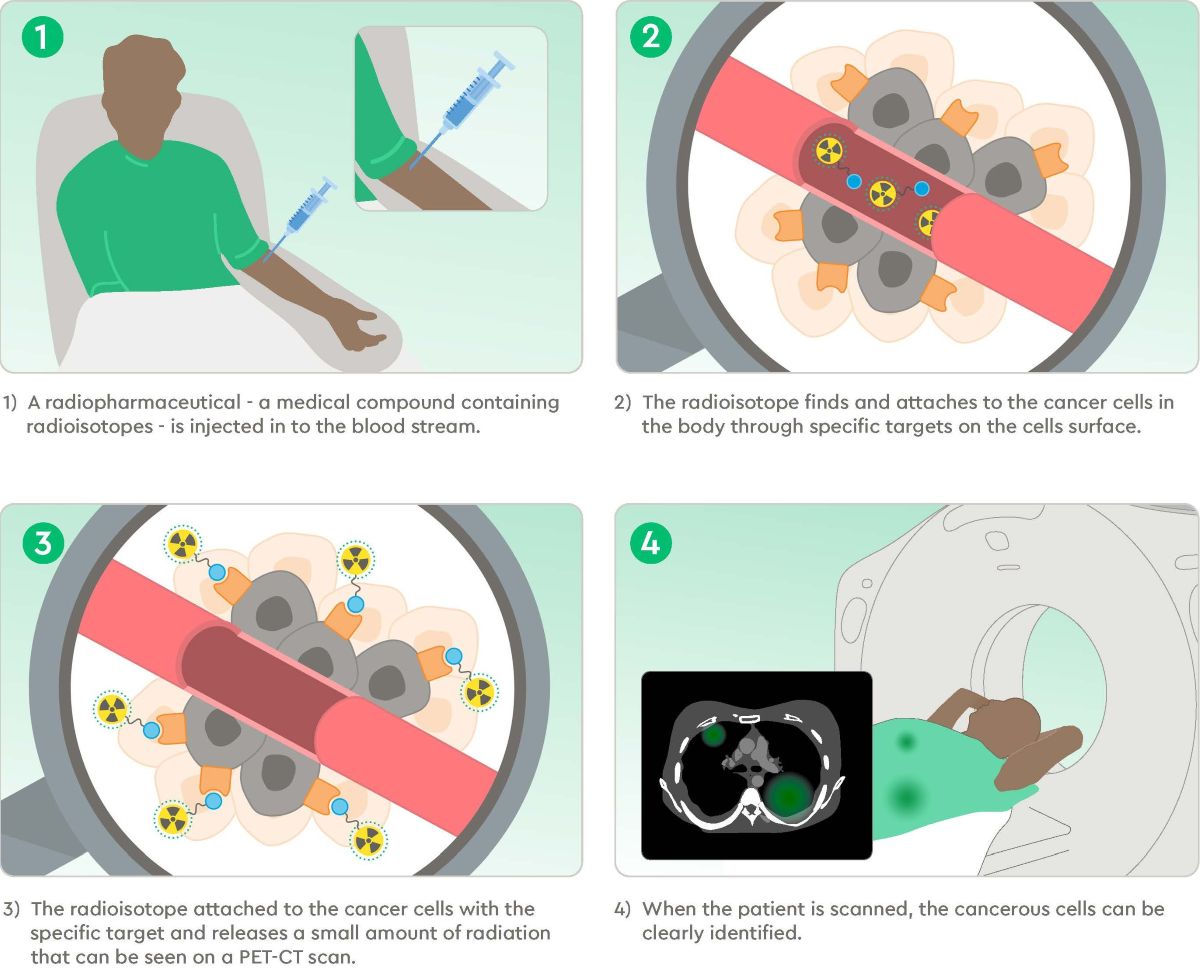
At the diagnostic stage, a radioactive drug called a radiopharmaceutical – a medical compound containing radioisotopes – is injected into your bloodstream.
This binds to cancer cells via a targeting molecule and emits a low dose of radiation that can be detected by an imaging scan, such as a PET-CT.
This allows your doctor to identify where cancer is located in your body and assess whether targeted therapy may be a suitable treatment option for you.
Phase 2: Theranostics Treatment
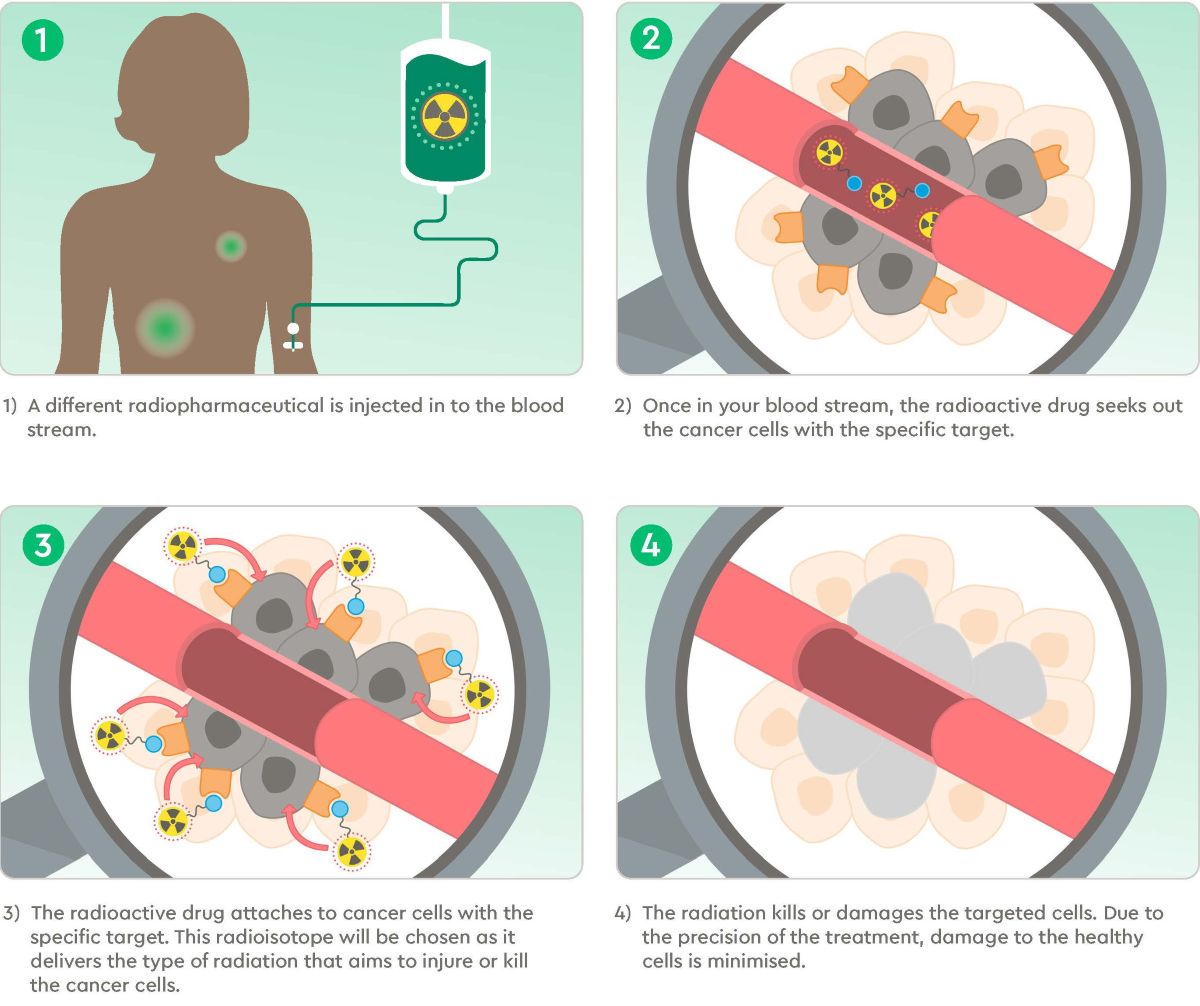
Treatment uses a similar approach, with a radiopharmaceutical containing a different radioisotope injected into your bloodstream.
Once in the bloodstream, the radioactive drug binds to cancer cells with a specific target and delivers radiation that damages or destroys those cells. Due to the precision of the treatment, the radiopharmaceutical attaches to healthy tissue only in minimal amounts, helping to reduce damage to healthy cells. The drug that does not reach the target is typically cleared from the body over time. Targeting radiation in this way may help reduce the side effects associated with treatment.
Administration is generally via intravenous (IV) infusion over a period ranging from minutes to hours. Treatment may consist of a single dose or multiple infusions delivered at intervals of several weeks.
Some Theranostics treatments are listed on the Medicare Benefits Schedule (MBS) and may be eligible for Medicare rebates when specific clinical criteria are met. Depending on the treatment and individual circumstances, out-of-pocket expenses may still apply.
Other treatments may be accessed through the Special Access Scheme (SAS) or private funding arrangements and may also incur additional costs.
Please note that some therapeutic products used in theranostics may not be included on the Australian Register of Therapeutic Goods (ARTG) and/or may not be approved by the Therapeutic Goods Administration (TGA) for all indications. Where appropriate, access to these treatments may be provided through approved regulatory pathways, including the Special Access Scheme.
Medicare now provides funding support for selected Theranostics treatments through the Medicare Benefits Schedule (MBS).
For eligible patients with advanced metastatic castrate-resistant prostate cancer, MBS items 16050 and 16055 provide Medicare benefits for Lutetium-177 PSMA (Lu-PSMA) therapy. Item 16050 covers the initial treatment phase, while item 16055 supports additional treatment cycles for patients who continue to benefit from therapy without disease progression. Eligibility is based on specific clinical criteria, including PSMA positivity by PET/CT imaging and prior standard treatments.
From November 2025, MBS item 16060 provides Medicare support for Lutetium-177 DOTA-somatostatin receptor therapy (PRRT) for eligible patients with advanced neuroendocrine neoplasms (NENs). Patients must demonstrate high somatostatin receptor expression on a 68Ga-DOTA PET/CT scan and be assessed as suitable for treatment by a multidisciplinary neuroendocrine tumour team.
These Medicare-funded Theranostics treatments have improved access to targeted radionuclide therapies for patients with advanced cancer. Your treating specialist can advise whether treatment is appropriate for you and if you meet the relevant eligibility criteria and discuss any potential out-of-pocket costs that may apply.

You are leaving our website
You are now leaving our website. GenesisCare do not control this content and therefore are not responsible for its accuracy or reliability.

Theranostics treatment typically involves:
Before treatment commences, your Nuclear Medicine Physician will explain the treatment process, treatment options and any potential side effects. You will receive a care plan tailored to your needs.
Any out of pocket costs associated with your treatment will be discussed with you in a clear and simple way before you commence treatment.
In order to develop your treatment plan, you will be required to attend a few appointments. These will include a visit to an imaging department and pathology centre for your blood tests.
Prior to receiving your cycle of treatment, your Nuclear Medicine Physician will review your results and confirm your treatment plan.
A nurse will assess your overall health status.
You will be given a tour of the department and an overview of what to expect.
A nuclear medicine technologist or nuclear medicine physician will deliver your treatment via an injection and monitor you regularly. A nurse will check that you are hydrated throughout the day by ensuring you have enough liquids or may put you on a drip if necessary. The treatment will last approximately 4 hours.

We currently have four treatment centres in Australia and seven research locations.
Theranostics enquiry
Contact our theranostics team directly to find out how we can help you.
Our theranostics specialists





- Gomes Marin, J. F., Nunes, R. F., Coutinho, A. M., et al. (2020). Theranostics in nuclear medicine: Emerging and re-emerging integrated imaging and therapies in the era of precision oncology. Radiographics, 40(6), 1715–1740. https://doi.org/10.1148/rg.2020200030
- Vu, T. M., Loveday, B. P. T., Behrenbruch, C., Hollande, F., & Heriot, A. G. (2022). Theranostics: A fifth pillar of contemporary cancer care? ANZ Journal of Surgery, 92(11), 2782–2783. https://doi.org/10.1111/ans.17845
- Therapeutic Goods Administration. (2023). Special access scheme: Guidance for health practitioners accessing unapproved therapeutic goods (Version 1.0). Australian Government.
Explore more




You are leaving our website
You are now leaving our website. GenesisCare do not control this content and therefore are not responsible for its accuracy or reliability.