







Australian Government Department of Health, Disability and Ageing. (n.d.). Screening for cancer. Retrieved September 2025, from https://www.health.gov.au/topics/cancer/screening-for-cancer
Cancer Council Australia. (n.d.). Early detection and screening. Retrieved September 2025, from https://www.cancer.org.au/cancer-information/causes-and-prevention/early-detection-and-screening
Australian Government Department of Health, Disability and Ageing. (n.d.). BreastScreen Australia Program. Retrieved September 2025, from https://www.health.gov.au/our-work/breastscreen-australia-program
Australian Government Department of Health, Disability and Ageing. (n.d.). National Bowel Cancer Screening Program. Retrieved September 2025, from https://www.health.gov.au/our-work/national-bowel-cancer-screening-program
Australian Government Department of Health, Disability and Ageing. (n.d.). National Cervical Screening Program. Retrieved September 2025, from https://www.health.gov.au/our-work/national-cervical-screening-program
Australian Government Department of Health, Disability and Ageing. (2025). National Lung Cancer Screening Program (NLCSP). Retrieved September 2025, from https://www.health.gov.au/our-work/nlcsp
Australian Government Department of Health, Disability and Ageing. (2025). Prostate cancer screening – position statement. Retrieved September 2025, from https://www.health.gov.au/resources/publications/prostate-cancer-screening-position-statement
Prostate Cancer Foundation of Australia. (n.d.). Retrieved September 2025, from https://www.pcfa.org.au/about-us/pcfa-s-policy-on-psa-testing/
Australian Government Department of Health, Disability and Ageing. (2025). Skin cancer screening – position statement. Retrieved September 2025, from https://www.health.gov.au/resources/publications/skin-cancer-screening-position-statement
Cancer Council Australia. (n.d.). Check for signs of skin cancer. Retrieved September 2025, from https://www.cancer.org.au/cancer-information/causes-and-prevention/sun-safety/check-for-signs-of-skin-cancer
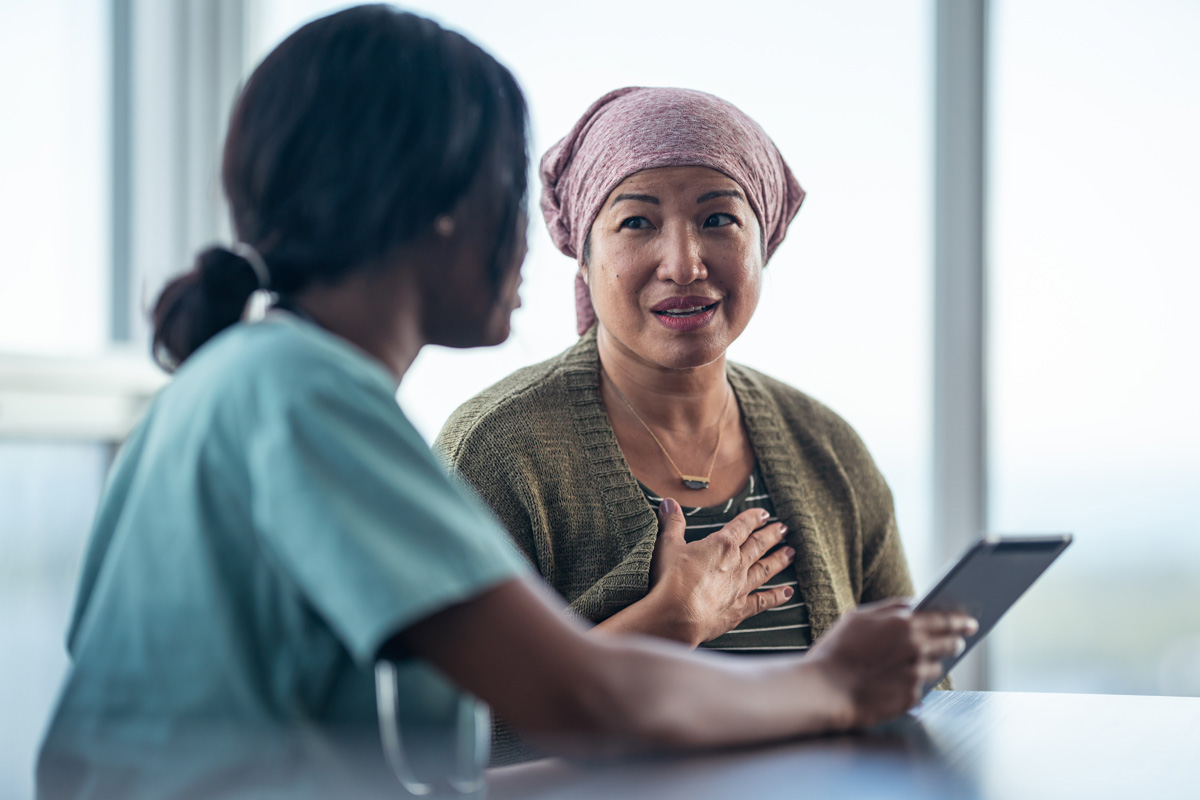
Cancer screening saves lives1,2
Screening is different to diagnostic testing. Screening is testing for a disease when a person doesn’t have any symptoms, versus testing once symptoms have appeared.
Diagnostic testing is used to confirm the disease when a person already has symptoms.
Why is cancer screening important?
- Cancer screening saves lives, as many types of cancer can be detected before any symptoms appear..1,2
- In general, cancer takes a long time to develop, so screening can pick up cancer in its early stages by identifying changes in cells before they become cancerous.1,2
- The earlier cancer is detected, the better the chance that treatment will work and the individual will survive.1,2
- Your body changes over time, so regular screening is important.
Make an enquiry
Contact us today to find out how GenesisCare can help you.
National screening programs for breast, bowel, cervical and lung cancer are available in Australia, and if you are eligible, you will receive an invitation in the mail to carry out the test.

Types of screening
The chances of getting breast cancer increase with age, with one in seven women developing breast cancer in their lifetime.3
Since the introduction of screening, 5-year survival rates have gone up to 94%.3
Women aged between 50 and 74 years are invited to receive a free mammogram every two years under the screening program. Women aged 40 to over 75 are also eligible for a free mammogram; however do not receive a specific invitation.3
Bowel cancer is one of the most common cancers in Australia. If found early, more than 90% of cases of bowel cancer can be successfully treated.4
A free, at-home test for those aged 45-74, that you undertake every two years.
All Australians aged 45 to 74 are eligible for a free bowel screening provided they have an Australian Medicare card and an Australian mailing address.
While people aged 50 to 74 automatically receive a test kit in the mail, people aged 45 to 49 must request their first kit. Testing is recommended every two years.
Cervical cancer is one of the most preventable cancers. Most cervical cancer occurs in people who have never been screened or have not screened regularly.
The test detects the presence of HPV so that it can be monitored or further investigated if required.5
Women aged 25–74 are eligible to screen under the Cervical Screening Program. Screening is every five years. If you haven’t had a screening recently, book an appointment with your GP.
Lung cancer is the fifth most common cancer in Australia, and the leading cause of cancer deaths.6
Launched in July 2025, the lung cancer screening program screens for lung cancer in high-risk individuals using CT scans. People are eligible for the program if aged between 50 and 70 years and:
- show no signs or symptoms suggesting you may have lung cancer (that is, you are asymptomatic), e.g. persistent unexplained cough, coughing up blood or unexplained shortness of breath
- currently smoke or have quit smoking in the past 10 years
- have a history of tobacco cigarette smoking of at least 30 pack-years.
The program is free and aims to improve early detection in healthy individuals.
There are ~21,000 new cases of prostate cancer diagnosed each year, with the risk getting higher as men age. It is important that men are aware of prostate cancer, but early detection is not as straightforward as for the other cancers mentioned above.7
In Australia, there is no national prostate cancer screening program, but men can talk to their GP about having a Prostate Specific Antigen (PSA) blood test.
This test measures levels of PSA, a protein produced by the prostate, which can be higher in men with prostate cancer as well as other common conditions like an enlarged or inflamed prostate.
Because the test is not perfect and may lead to further tests such as a biopsy, men are encouraged to discuss the potential benefits and risks with their doctor before deciding whether prostate cancer screening is right for them. 7,8
Population screening for melanoma and non-melanoma skin cancers is not something carried out in Australia. However, it is recommended that you talk to your GP about your level of risk and for advice on early detection.9
It’s important to know your own skin – what’s normal for you – so you can tell when anything changes. Skin cancers are rarely painful; changes are usually seen rather than felt.
Get into the habit of checking your skin regularly from top to toe, in good light. The Cancer Council’s ABCDE melanoma detection guide can be useful to follow when checking your skin.10
Find a centre
Contact us today to find out how GenesisCare can help you.

As we’ve mentioned, treatment can be more effective when cancer is found early. Keep an eye out for any unusual changes to your body, such as:
- lumpiness or thickened areas in your breasts, any changes in the shape or colour of your breasts, unusual nipple discharge, a nipple that turns inwards (if it hasn't always been that way) or any unusual pain
- a lump in the neck, armpit or anywhere else in the body (lymph glands)
- sores or ulcers that don't heal
- coughs or hoarseness that won't go away or coughing up blood
- changes in bowel habits that last more than two weeks, blood in a bowel motion
- changes in urine habits – increased or decreased frequency, output or unusual smell, or blood in urine
- new moles or skin spots, or ones that have changed shape, size or colour, or that bleed
- unusual vaginal discharge or bleeding
- unexplained weight loss.
If you are worried about any symptoms or know you are at a higher risk of certain cancers, always consult with your GP.
··
Find a centre
Contact us today to find out how GenesisCare can help you.