
Deep Inspiration Breath Hold (DIBH) is a technique where you take a deep breath while radiation therapy is delivered. When you hold your breath, your lungs fill with air and your chest expands. This causes your heart (on the left side) and liver (on the right side) to move down and away from the chest wall, and further away from the radiation treatment field.1-3
DIBH minimises radiation exposure to the heart

When you hold your breath, the chest is expanded and your heart and liver move down and away from the chest wall – and further away from the field of radiation.1-3
What do we use DIBH for?
We may ask you to use DIBH when you are having radiation therapy for:
- Left-sided breast cancer
- Lymphoma in the chest region
- Tumours of the chest or upper abdomen
Your radiation therapy team will advise whether DIBH is suitable for you and will guide you through the process.
During DIBH, we ask you to hold your breath for between 20 and 30 seconds. With some practice, this usually becomes quite easy.
We only start radiation treatment when we direct you to take a deep breath. As you take a deep breath, your heart and liver move away from the treatment area. You will usually need to do DIBH two or three times during each treatment session.4
During radiation therapy with DIBH, you remain in control of your breathing. Specialised monitoring equipment ensures that radiation is only delivered when you are completely still. If you move even slightly out of position or release your breath early, the radiation beam will automatically turn off.4
How to practise DIBH at home
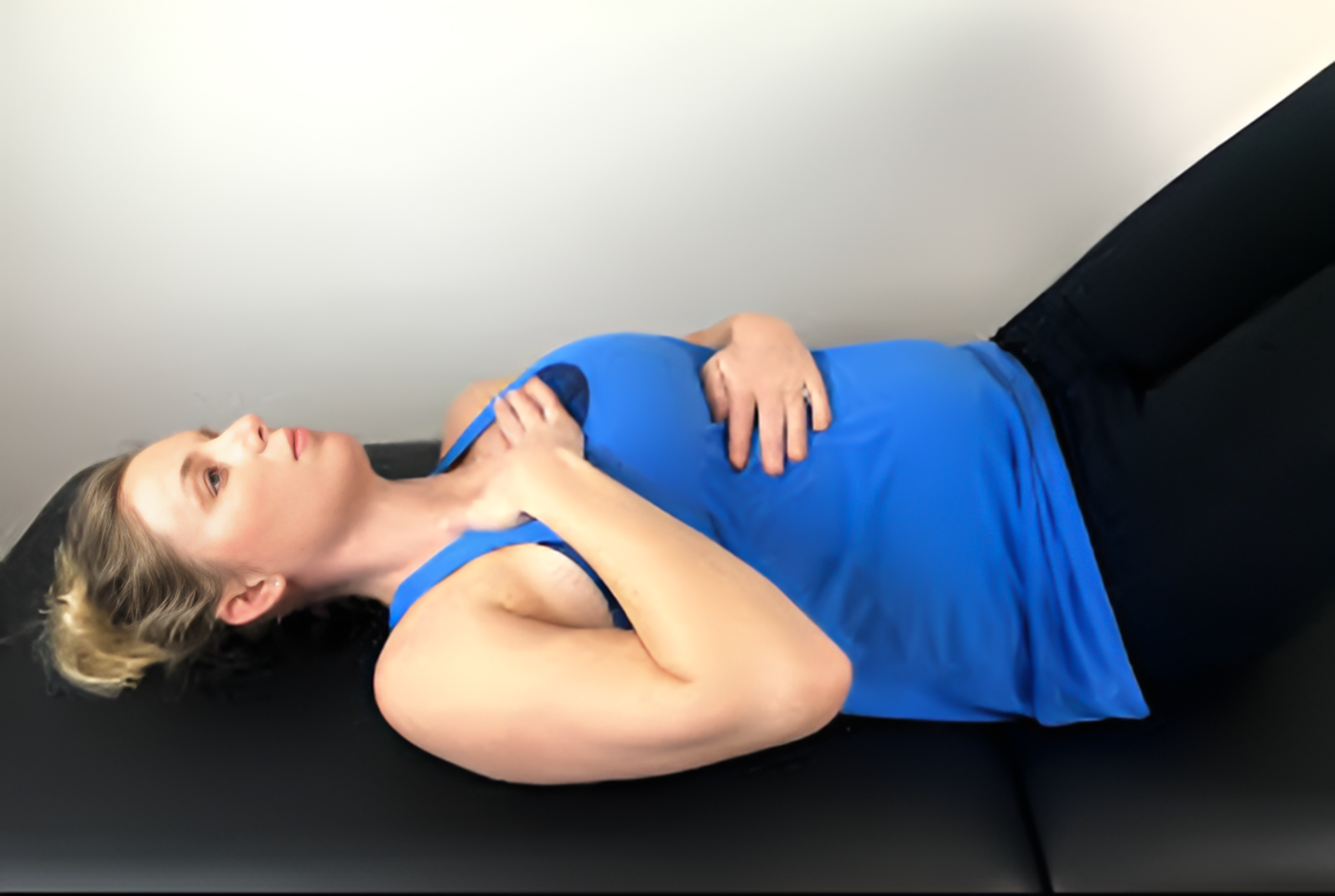
- Lie on your back on your bed or on the floor
- Use a pillow to support your knees and head
- Place your arms above your head, as you were shown during your radiation therapy planning session
- When you are ready, take a slow, deep breath in. Your back should remain flat on the bed or floor
- Try holding your breath for a few seconds, then gradually increase the time each time you practise, working up to 20 seconds
- When you feel ready and confident, take a slow, deep breath in and hold your breath for at least 20 seconds
- Slowly breathe out
- Return to your normal breathing
- Once you have returned to normal breathing, you can try again
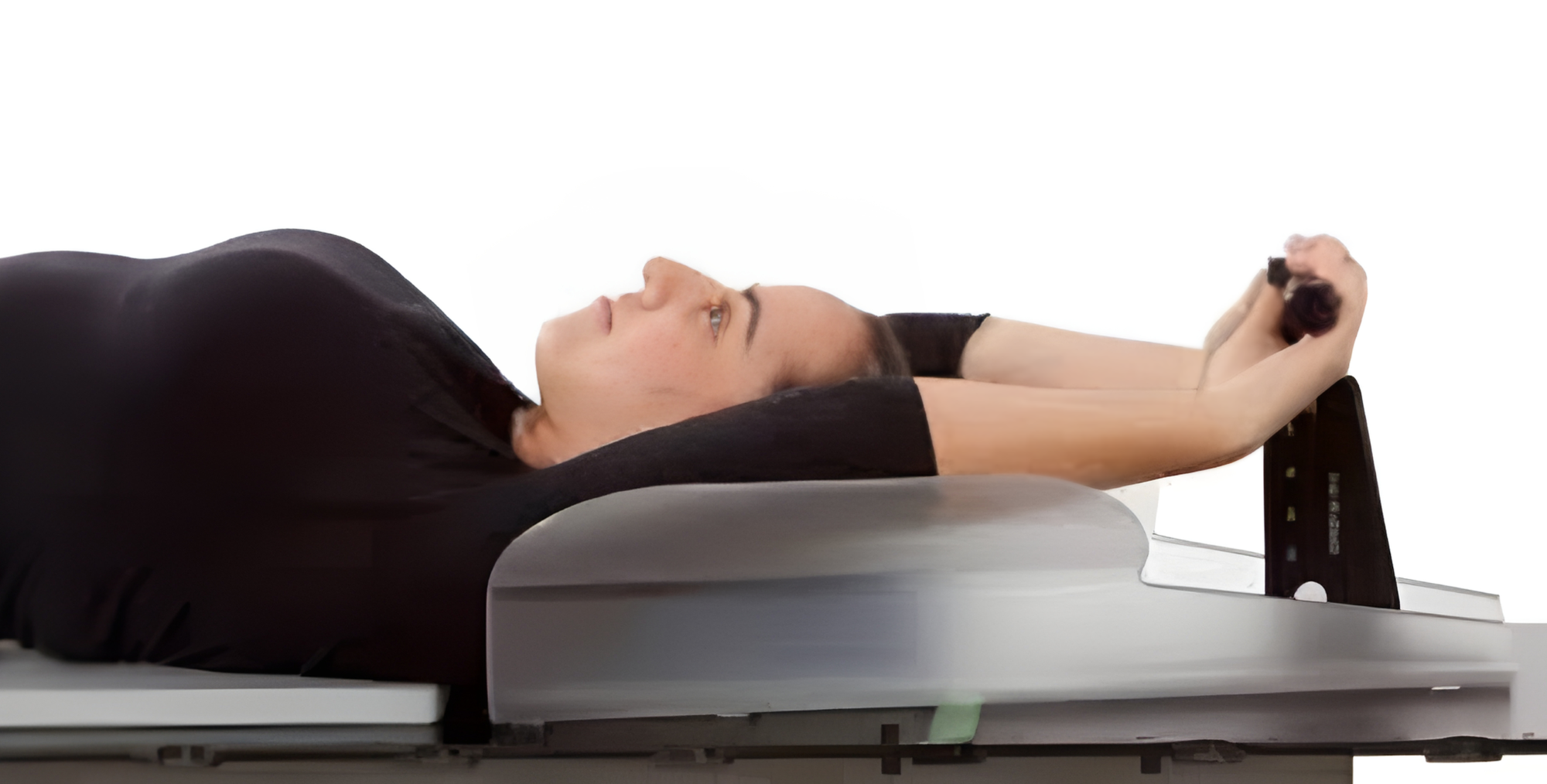
To mimic your treatment position, you can practice holding your breath for 15-30 seconds with your arms relaxed above your head (remember, if you need to arch your back, it is likely your breath is too large and not reproducible for treatment).
Practise DIBH a few times each day. Remember to relax, focus on your breathing, and most importantly, take it at your own pace. Your radiation therapy team will be there to help and guide you.
- Stowe, H. B., Andruska, N. D., Reynoso, F., Thomas, M., & Bergom, C. (2022). Heart sparing radiotherapy techniques in breast cancer: A focus on deep inspiration breath hold. Breast Cancer: Targets and Therapy, 14, 175–186. https://doi.org/10.2147/BCTT.S282799
- Moorfoot, P., Le-Nguyen, S., Phung, C., Chao, M., Bayley, K., & Cokelek, M. (2025). Comparative evaluation of DIBH and free breathing for right-sided breast cancer with IMRT and VMAT techniques [Abstract]. Journal of Medical Imaging and Radiation Oncology, 69(Suppl. 2).
- Cokelek, M., et al. (2025). Impact of artificial intelligence-driven autosegmentation on contouring time and quality in prostate radiation therapy [Abstract]. International Journal of Radiation Oncology, Biology, Physics, 123(Suppl. 1), E418–E419.
- Latty, D., Stuart, K. E., Wang, W., & Ahern, V. (2015). Review of deep inspiration breath-hold techniques for the treatment of breast cancer. Journal of Medical Radiation Sciences, 62(1), 74–81. https://doi.org/10.1002/jmrs.96