




GenesisCare-led research shows an opportunity to reduce unnecessary exposure to the side-effects of hormone therapy (Short-Term Androgen Deprivation Therapy or ST-ADT) for men with intermediate-risk prostate cancer.
- The ASTuTE trial aimed to collect real-world data on how a laboratory test utilising artificial intelligence (AI), called the Artera AI Prostate Test, could help to make treatment decisions for men with intermediate risk prostate cancer. The test provides information about the risk of prostate cancer spreading and predicts whether there is likely to be benefit from the patient receiving hormone therapy (ST-ADT).
- A total of 786 men participated in the trial.
- All 786 men completed the Artera AI Prostate Test. Before the test, 230 were recommended hormone therapy while 556 were not recommended hormone therapy based on current clinical guidelines.
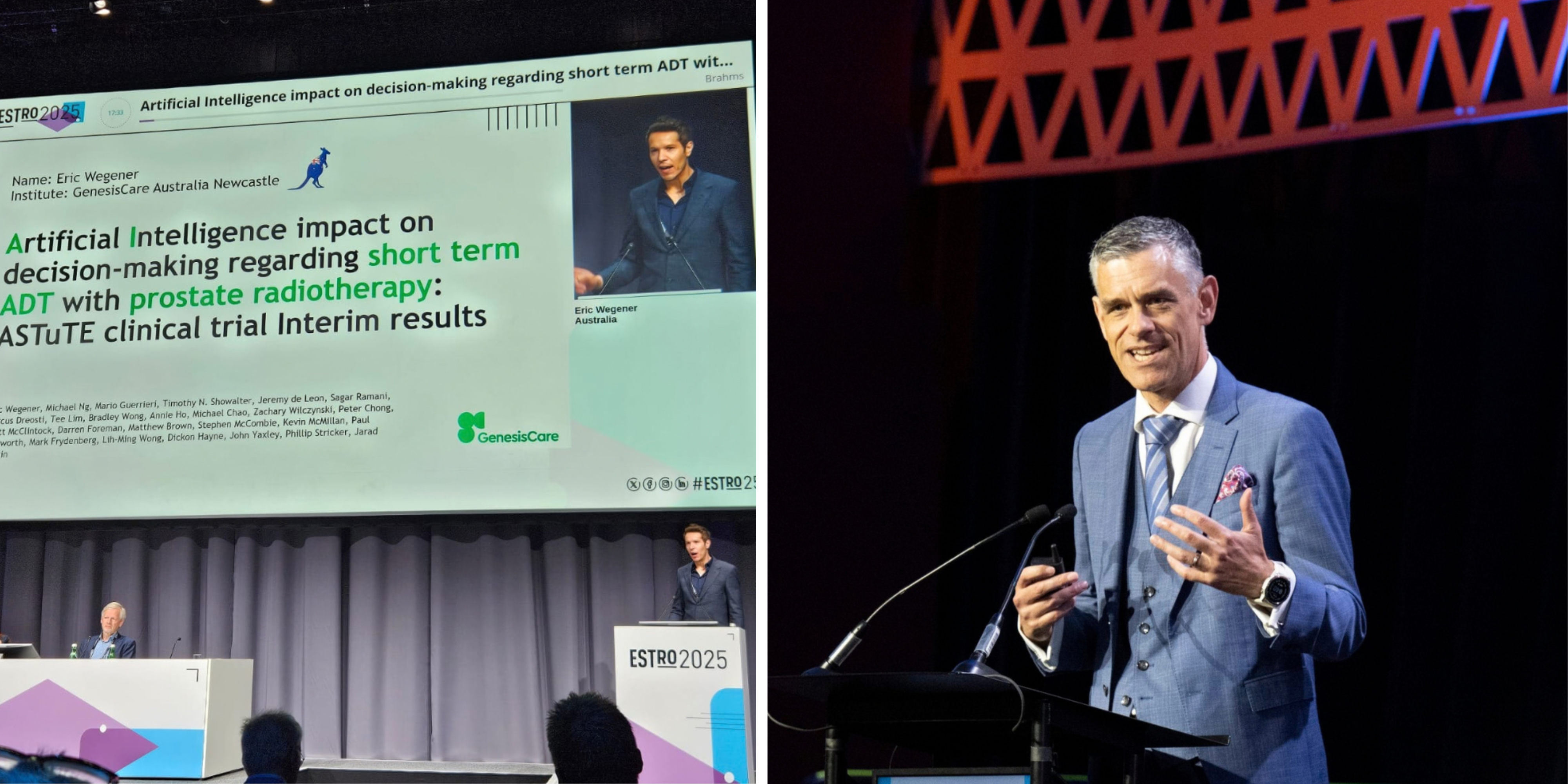
(L-R) GenesisCare Radiation Oncologists and ASTuTE principle investigators, Dr Eric Wegener and Prof Jarad Martin presenting at ESTRO 2025.
- 176 of 230 (approximately 77%), or around 3 in 4 men initially recommended hormone therapy (ST-ADT), ultimately did not proceed with hormone therapy after AI testing and discussion with their treating clinician.
- Out of the 556 who were not initially recommended hormone therapy, 21 were likely to benefit from hormone therapy, despite not initially being recommended it. This demonstrates its potential to both reduce and appropriately escalate treatment where clinically indicated.
- Overall, hormone therapy (ST-ADT) use decreased by net 20.7% across the study population.
| Date | Presentation / Publication | Type |
|---|---|---|
| 29/09/2026 | Beyond NCCN: How a Prognostic and Predictive Multimodal AI Biomarker Drives ADT De-Escalation In Prostate Cancer | Abstract: Oral Presentation |
| 10/08/2026 | Artificial Intelligence impact on decision-making regarding short-term ADT with prostate radiotherapy: ASTuTE clinical trial interim results | Journal Article |
| 23/10/2025 | Artera interim analysis | Abstract: Oral Presentation |
| 13/08/2025 | ASTUTE & PREDICT | Abstract: Oral Presentation |
| 05/05/2025 | Artificial Intelligence impact on decision-making regarding short term ADT with prostate radiotherapy: ASTuTE clinical trial Interim results | Abstract: Oral Presentation |
| 14/04/2025 | Correlation Between PSMA PET/CT and Artera-AI Prostate Test in Intermediate Risk Prostate Cancer Patients | Abstract: Oral Presentation |
| 13/02/2025 | A multicentre implementation trial of an Artificial Intelligence-driven biomarker to inform Shared decisions for androgen deprivation therapy in men undergoing prostate radiotherapy: the ASTuTE protocol | Journal Article |
| 13/09/2024 | Artificial intelligence steering testosterone deprivation treatments in prostate cancer external-beam radiotherapy (ASTuTE) trial | Abstract: Oral Presentation |
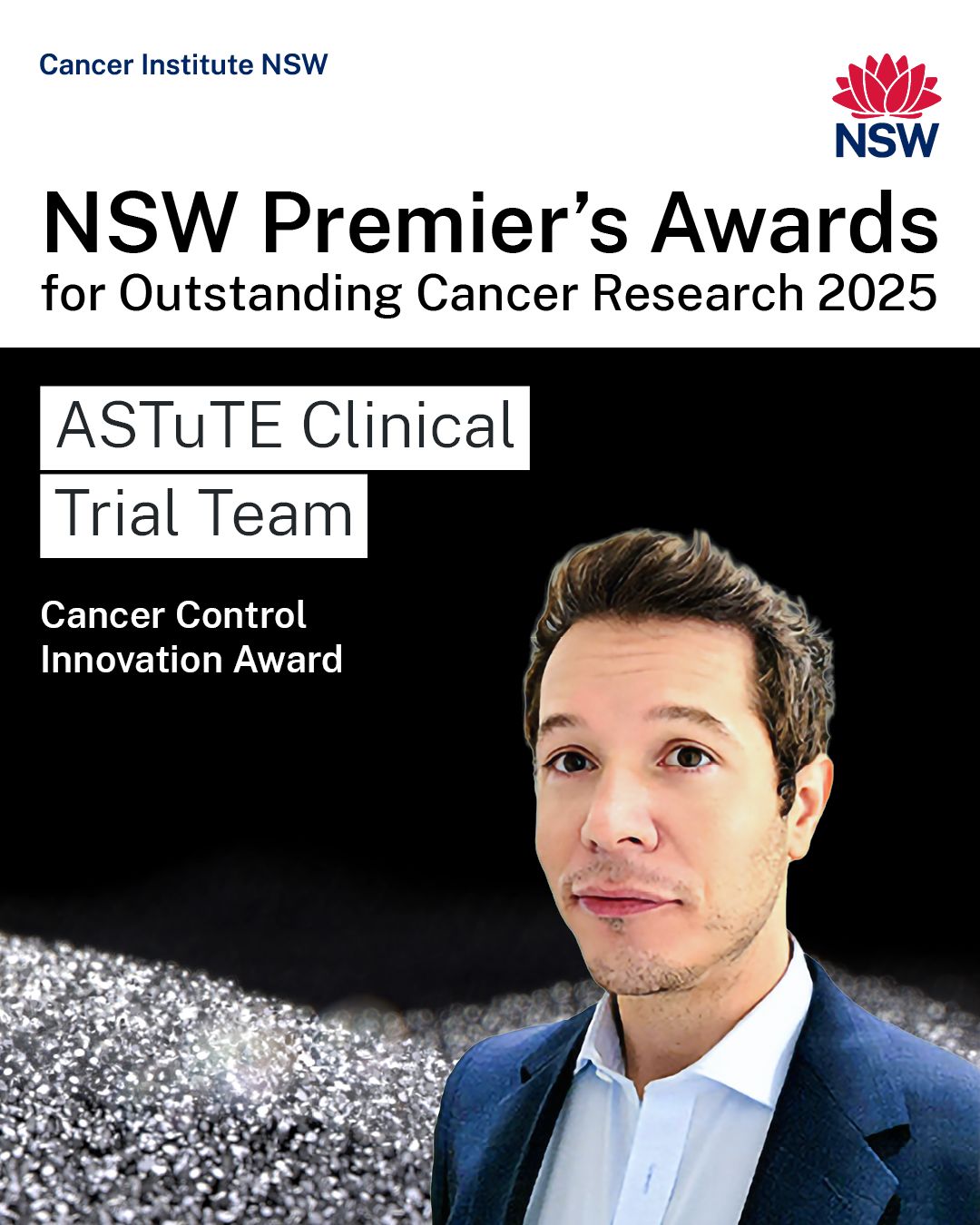
- NSW Premier's Outstanding Cancer Research Awards — Co-winner of the Cancer Control Innovation Award
- ESTRO: 2025 - best of ESTRO (top 5% abstracts)
- APCC: 2025 - Tony Costello award for best abstract
- RANZCR: 2025 – FROGG Award
- Regulatory assessment: included in the Australian Medical Services Advisory Committee (MSAC) Application 1788 for national public funding consideration of digital histopathology biomarkers









The ASTuTE trial is continuing recruitment for a subset of patients who have a subtype of intermediate-risk prostate cancer known as ‘unfavourable’. For more information, please contact research@genesiscare.com.
This research has been reviewed and approved by the St Vincent’s Hospital Melbourne Human Research Ethics Committee (HREC).