
ZAP-X is a specialised form of stereotactic radiosurgery (SRS) developed specifically for conditions affecting the brain and upper spine.
Despite the name, radiosurgery is not surgery. No incision is made and no anaesthetic is required. Highly focused radiation beams are directed at the treatment area with the aim of minimising exposure to nearby healthy tissue.3
Treatment is typically provided as an outpatient procedure, meaning patients usually go home the same day.1
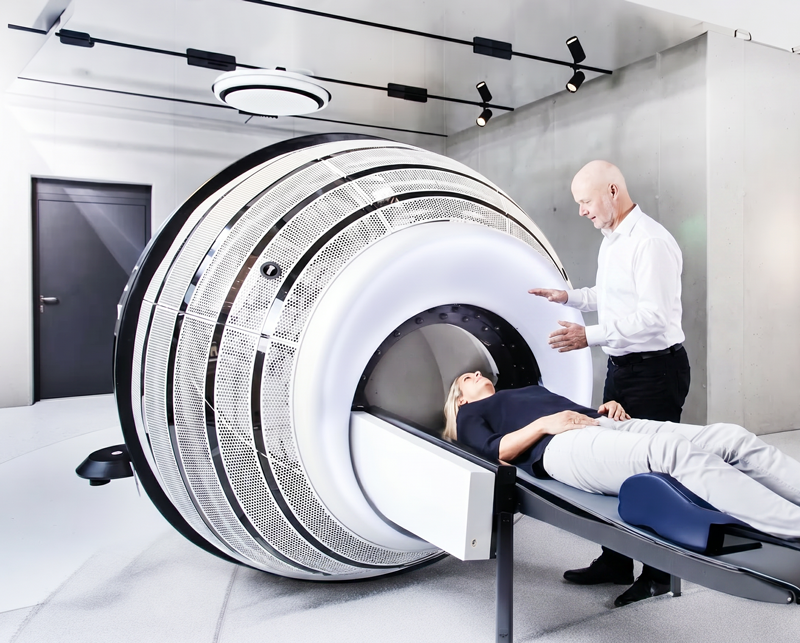
ZAP-X may be used to treat:4
- Brain metastases (secondary brain tumours)
- Meningiomas
- Pituitary adenomas
- Acoustic neuromas
- Arteriovenous malformations
- Trigeminal neuralgia
- Other selected intracranial conditions
- Select upper spinal tumours
Adults with the above conditions may be suitable for ZAP-X treatment.
Not every patient is suitable. Your treating specialist will assess your diagnosis, medical history and imaging to determine the most appropriate treatment approach.
Find out more
Contact us to refer a patient or learn more about treatment options
For patients
Contact us for more information about your treatment options
For clinicians
Refer a patient for ZAP-X treatment
ZAP-X is a non-invasive treatment option designed specifically for the treatment of selected brain tumours, brain metastases and other cranial conditions.1,2
| ||
| ||
| ||
|

Using detailed medical imaging, your treatment team identifies the precise location, size and shape of the area requiring treatment. ZAP-X then delivers multiple highly focused radiation beams from different angles around the head. Each individual beam uses a low dose of radiation, but where the beams converge at the target, they deliver the prescribed treatment dose.3
This approach allows ZAP-X to treat the target with high precision while limiting radiation exposure to surrounding healthy brain tissue. The treatment does not involve an incision or general anaesthetic and is usually delivered in one to five sessions, depending on your individual treatment plan.5
Before treatment:
Typical steps involve:
- A consultation with your specialist
- A planning CT scan
- An MRI scan, if required
- Development of an individual treatment plan
During treatment
- Treatment time varies depending on the condition being treated
- Patients typcially receive 1-5 sessions
- Treatments are scheduled on weekdays (Monday - Friday)
After treatment
- Most patients return home the same day
- Follow-up appointments and scans are arranged as required
- Your care team will continue to monitor your progress
All cancer treatments may have side effects. The type and severity of these can vary between individuals, depending on factors such as the treatment area and the proximity of surrounding organs and tissues. Most side effects are temporary and resolve after treatment.10
Radiation therapy side effects
More detailed information can be found on our Radiation Therapy Side Effects page
Where is ZAP-X available?
GenesisCare's ZAP‑X service is located within the Sacred Heart Building in Darlinghurst, Sydney, opposite St Vincent's Private Hospital.
GenesisCare Darlinghurst at St Vincent's Hospital
ZAP-X treatment requires the involvement of both a radiation oncologist and a neurosurgeon, who work with other members of your multidisciplinary care team.
- Radiation oncologist: Specialises in treating conditions with radiation. They prescribe the radiation dose and oversee your ZAP-X treatment plan.
- Neurosurgeon: Assesses your condition and provides specialist expertise on the area being treated and whether radiosurgery is appropriate.
Our ZAP-X radiation oncologists
Dr Sandy Sampaio
Radiation Oncologist
MBBCh, FRANZCR
Dr Annie Ho
Radiation Oncologist
MBBS, FRANZCR
Dr Andrej Bece
Radiation Oncologist
MBBS, BAppSc Optom (Hons), FRANZCR
Contact us to refer a patient or learn more about treatment options
For patients
Contact us for more information about your treatment options
For clinicians
Refer a patient for ZAP-X treatment
ZAP-X may be suitable for people with selected brain tumours, brain metastases and other conditions affecting the brain or head. Suitability depends on factors including the type, size, number and location of the areas requiring treatment, your general health and any previous treatment you have received. A radiation oncologist and neurosurgeon will review your condition and medical imaging to determine whether ZAP-X is an appropriate treatment option for you.4,9
Many patients receive treatment in a single session, although some conditions may require several treatments.8,9
The number of sessions you need will depend on factors such as the size and location of the treatment area and its proximity to sensitive structures. Your treatment team will develop an individual treatment plan and explain how many sessions they recommend.
The treatment itself may take from several minutes to an hour or more, depending on the size, shape and number of areas being treated. You will need additional time for preparation and positioning before treatment begins. Your treatment team will provide a more specific estimate based on your individual treatment plan.1,9
- Chen, T., Pema, P., Chaga, M., Feng, W., Wang, T., Conti, D., Feng, J., Anthony, A., Rodrigo, M. R., Shah, H., Monahan, D., Luick, E., Thompson, D., Baldwin, J., Latif, B., Montone, G., Hanley, J., Patel, N. V., & Danish, S. (2025). ZAP-X stereotactic radiosurgery: The initial experience involving 200 patients. Cureus, 17(12), e98320. https://doi.org/10.7759/cureus.98320
- Qiu, H., O'Connor, D., Balasubramanian, K., Gunter, T., McClelland, S., III, & Shakir, H. J. (2026). ZAP-X self-shielding gyroscopic radiosurgery: A scoping review of technical characteristics and early clinical experience. Journal of Clinical Neuroscience, 152, 112167. https://doi.org/10.1016/j.jocn.2026.112167
- Weidlich, G. A., Bodduluri, M., Achkire, Y., Lee, C., & Adler, J. R., Jr. (2019). Characterization of a novel 3 megavolt linear accelerator for dedicated intracranial stereotactic radiosurgery. Cureus, 11(5), e4604. https://doi.org/10.7759/cureus.4604
- Pema, P., Sweeney, P., Shah, H., Chaga, M., Feng, W., Conti, D., Feng, J., Wang, T., Rodrigo, M. R., Hanley, J., Chen, T., & Danish, S. (2025). Initial outcomes of ZAP-X stereotactic radiosurgery for the treatment of spinal tumors: A case series. Cureus, 17(7), e87692. https://doi.org/10.7759/cureus.87692
- Gondi, V., Bauman, G., Bradfield, L., Burri, S. H., Cabrera, A. R., Cunningham, D. A., Eaton, B. R., Hattangadi-Gluth, J. A., Kim, M. M., Kotecha, R., Kraemer, L., Li, J., Nagpal, S., Rusthoven, C. G., Suh, J. H., Tomé, W. A., Wang, T. J. C., Zimmer, A. S., Ziu, M., & Brown, P. D. (2022). Radiation therapy for brain metastases: An ASTRO clinical practice guideline. Practical Radiation Oncology, 12(4), 265–282. https://doi.org/10.1016/j.prro.2022.02.003
- Weidlich, G. A., & Keener, J. (2022). X-ray target shielding and leakage radiation inside the treatment capsule of the ZAP-X. Cureus, 14(11), e31490. https://doi.org/10.7759/cureus.31490
- Hendricks, B. K., DiDomenico, J. D., Barani, I. J., & Barranco, F. D. (2022). ZAP-X gyroscopic radiosurgery system: A preliminary analysis of clinical applications within a retrospective case series. Stereotactic and Functional Neurosurgery, 100(2), 95–102. https://doi.org/10.1159/000519862
- Horiba, A., Hayashi, M., Maruyama, T., Nomura, R., Kim, P., & Kawamata, T. (2024). ZAP-X radiosurgery system: Initial clinical experience in a recurrent Gamma Knife case series. Cureus, 16(11), e74005. https://doi.org/10.7759/cureus.74005
- ZAP Surgical Systems. (2023). ZAP-X® patient brochure (Version r01.6). Retrieved July 2026, from https://zapsurgical.com/wp-content/uploads/ZAP_Patient_Brochure_DIGITAL.r01.6.pdf
- Cancer Council Australia. (2023). Understanding radiation therapy. Retrieved July 2026, from https://www.cancer.org.au/assets/pdf/understanding-radiation-therapy-booklet