

Every diagnosis is different
When breast cancer spreads to another part of the body, it can be a lot to take in. But secondary breast cancer is not the same for everyone.
An estimated 61,000 people are living with secondary breast cancer in the UK. In around 5% of patients, breast cancer has already spread by the time it is diagnosed.1
Where the cancer has spread to, how many areas are affected and how the cancer is behaving can all influence the treatment options.
This page explains what secondary breast cancer is, where it can spread to and how treatments options can vary from person to person.
72% of breast cancer survivors don’t know where in the body secondary breast cancer is most likely to appear
About secondary breast cancer
When breast cancer spreads beyond the breast or adjacent lymph nodes to another part of the body, it’s known as secondary breast cancer and can also be referred to as metastatic breast cancer or stage 4 breast cancer.
Secondary breast cancer can spread to different parts of the body. The most common sites are:
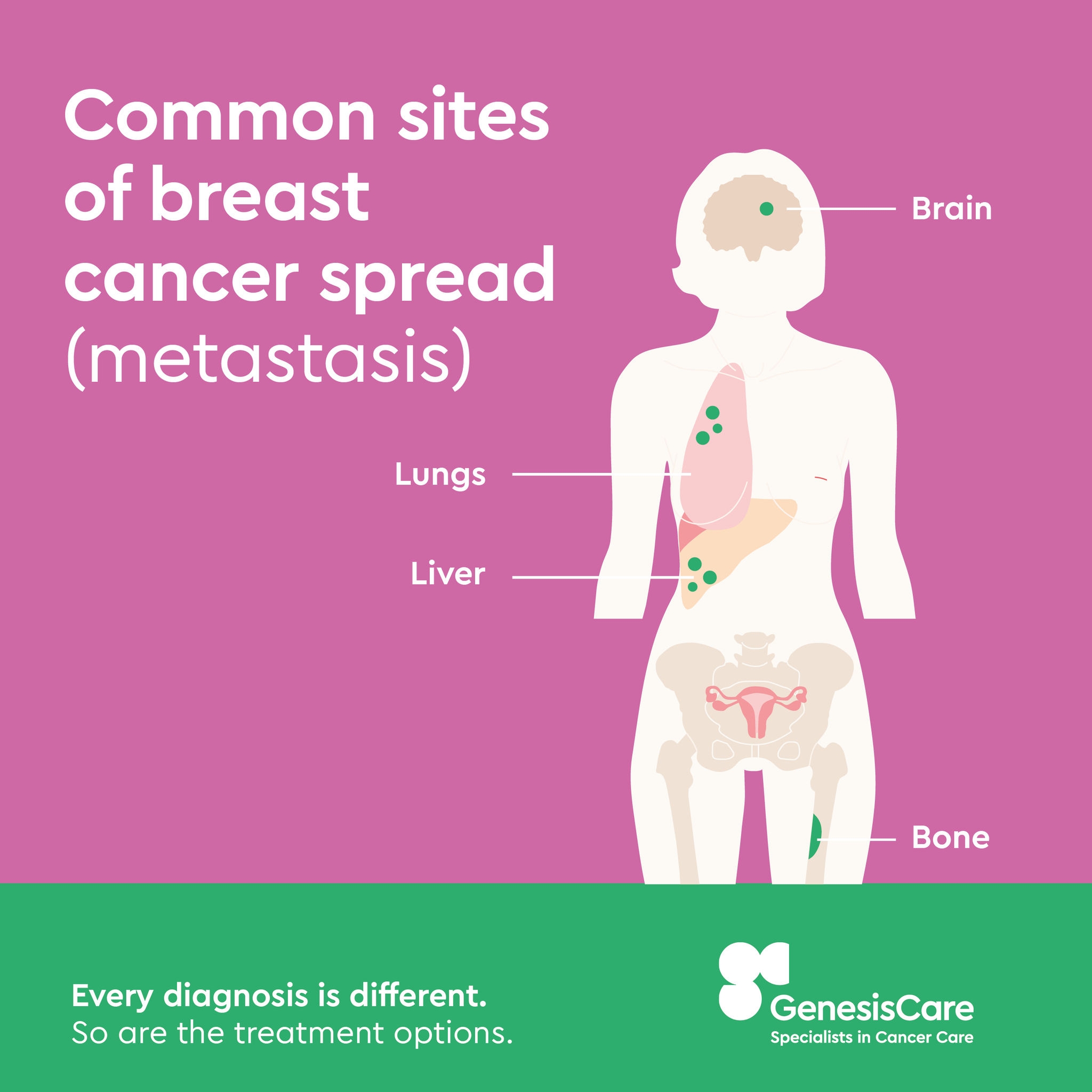
No matter where in the body the breast cancer has spread, it’s still referred to as metastatic breast cancer.
Contact us
If you would like to speak to someone about how we can help, contact us today for advice or to book an appointment.
How is secondary breast cancer diagnosed?
Between 10% and 40% of people diagnosed with primary breast cancer will go on to develop secondary breast cancer. For some, secondary breast cancer can be diagnosed when breast cancer is first diagnosed (this is called de-novo or synchronous metastatic breast cancer). For others it can develop months or years after their original treatment.
The symptoms of secondary breast cancer can vary depending on where the cancer has spread in the body.
It’s important to be aware of any new, persistent or unexplained symptoms and to contact your GP if you have any concerns. It’s important to tell them if you’ve undergone cancer treatment before so appropriate assessment and support can be provided.
If patients are still under the care of an oncologist, they can speak with them directly about any new or ongoing concerns. They can then decide whether there’s a need further assessment or treatment.
Diagnosis
If secondary breast cancer is suspected, tests may be used to check whether the cancer has spread and where it may be in the body. The tests recommended will depend on each person’s circumstances and symptoms. These can include:
- Blood tests – These may be used to look for changes that could provide additional information, although blood tests alone cannot usually confirm secondary breast cancer.
- Scans – Such as CT, MRI, PET-CT, ultrasound or bone scans, depending on where the cancer may have spread.
- A biopsy – A small sample of tissue may be taken from the area of concern and examined under a microscope. This can help confirm whether it is secondary breast cancer and can provide information about the type of cancer, whether the cancer cells have hormone receptors or a protein called HER2, which can affect the treatment options.
At GenesisCare, we know first-hand how timely assessment, accurate diagnosis and advances in treatment are helping people with secondary breast cancer access personalised care, manage their condition and maintain quality of life.
Types of secondary breast cancer
Secondary breast cancer can affect different parts of the body and can behave differently from person to person. Some people may have cancer in one or a small number of areas, while others may have cancer that has spread to several parts of the body.
There are different terms to describe the pattern of secondary breast cancer, including:
The areas affected, how many there are, how the cancer is behaving and previous treatments can all influence which treatment options may be suitable.
Contact Us Today
If you have questions about secondary breast cancer and treatment options at GenesisCare, contact our friendly team for expert advice or to book an appointment.
The role of advanced radiotherapy for secondary breast cancer
Radiotherapy can be used to treat specific areas of secondary breast cancer.
Recent advances in radiotherapy have made it possible to deliver radiation very precisely to some areas of cancer, while aiming to minimise the dose to surrounding healthy tissue.
For some people, stereotactic ablative radiotherapy (SABR) may be considered when there are a small number of areas of secondary breast cancer that can be safely targeted. SABR delivers a high dose of radiation to a specific area of cancer in a small number of treatment sessions.
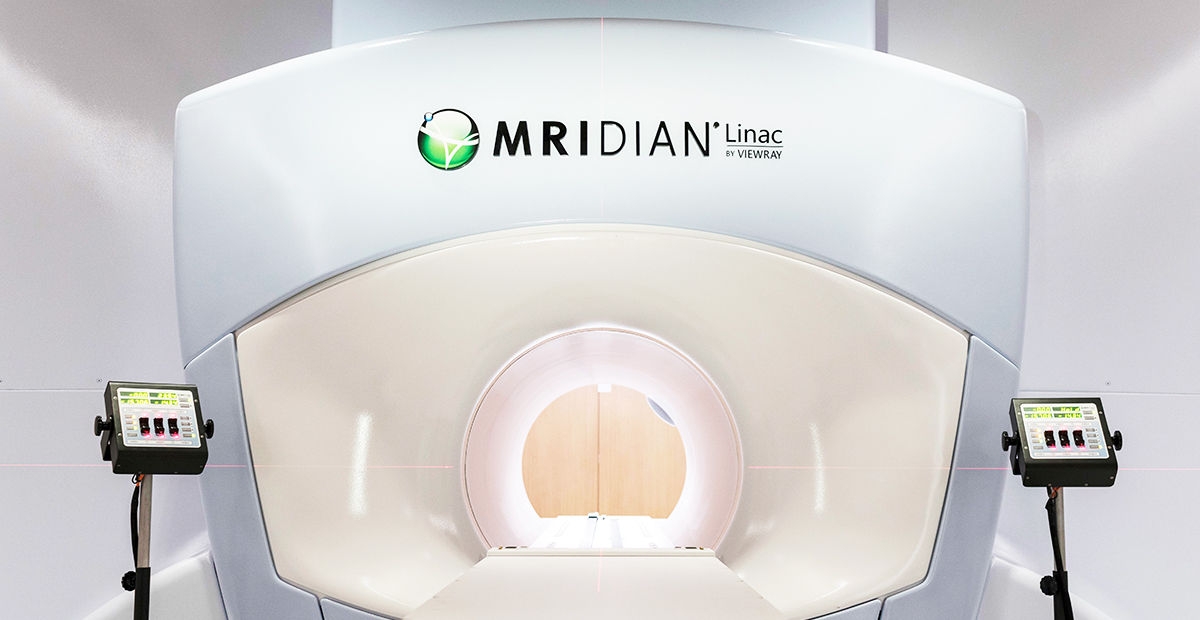
MRI-guided SABR delivered on an MR Linac incorporates live MRI imaging throughout treatment. This allows clinicians to see the tumour and surrounding organs more clearly, adapt the treatment to changes in the position the tumour and pause treatment if the tumour moves outside the planned treatment area. This can be particularly useful when treating tumours in areas where the position of the tumour or nearby organs can change during treatment.
SABR may be considered for people with:
- A small number of areas of secondary breast cancer
- Areas that are growing while other cancer remains controlled
- Selected areas of cancer in the liver, lungs, bones or other parts of the body
- Cancer that has returned in an area previously treated with radiotherapy, where further treatment may be possible
For secondary breast cancer that has spread to the brain, stereotactic radiosurgery (SRS) may be considered in some circumstances. SRS uses highly focused radiation to target one or more areas of cancer in the brain, whilst minimising exposure to surrounding healthy brain tissue.
Advanced radiotherapy may be used alongside systemic treatments, rather than instead of them. Whether SABR, MRI-guided SABR or SRS is appropriate depends on factors such as where the cancer has spread, how many areas are affected, the size and location, previous treatments and the patient’s overall treatment plan.
Take the next step
If you’d like to talk to someone about secondary breast cancer and potential treatment options, our friendly team is here to help.
Why choose GenesisCare
At GenesisCare, we specialise in cancer care for all types of adult cancer, including primary and secondary breast cancer.
Our experts have access to the latest systemic anti-cancer treatment options and the most innovative radiotherapy technology and techniques available, including surface guided radiotherapy (tattoo free) for early breast cancer and Stereotactic ablative radiotherapy (SABR) and MRI-guided radiotherapy for suitable patients with cancer spread. We also have the UK’s largest fleet of MR Linacs, which can support highly precise treatment for complex cancers, including cases where cancer has spread to the liver. For cancer that has spread to the brain, we are a national centre of excellence for advanced treatments using stereotactic radiosurgery (SRS) and Gamma Knife technology.
With a national network of 14 specialist outpatient cancer centres, and 3 more locations opening soon, we take referrals from throughout the UK. We also provide help with transport depending on treatment and locations, when required.
You don’t have to navigate your options alone - we’re here to help.



- 1
- 2
- 4
- 3
- 5